
Where the water goes once the slide is running
A water slide looks straightforward from the outside, but the drainage path decides how tidy the area stays. The slide itself needs a steady feed, yet the real job is keeping water moving away from entrances, walkways and any surface where children are queueing. On grass, water can spread quietly. On paving or polished school floors, it pools fast and turns into a slipping point before anyone notices.
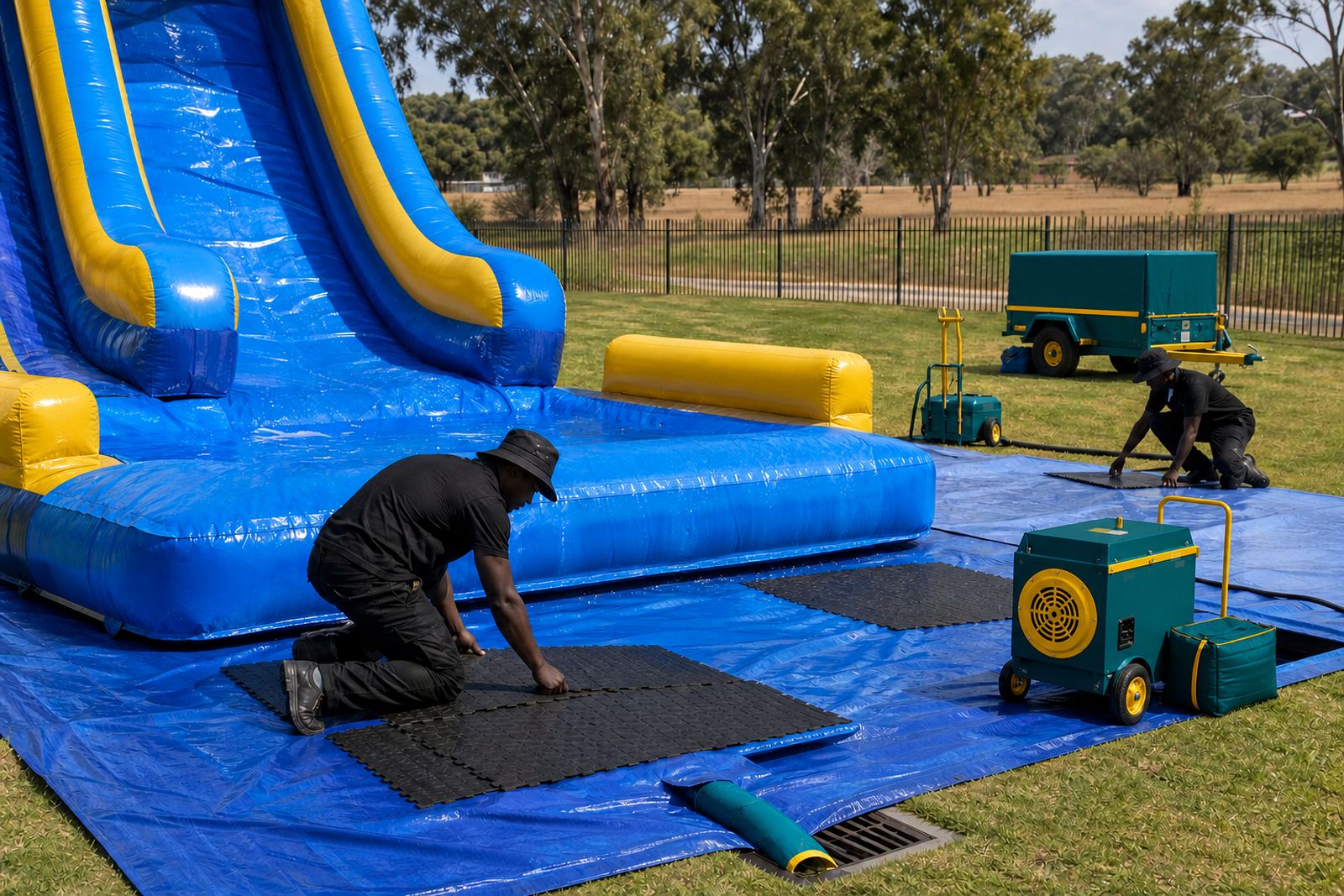
For a Midrand school fun day or a mall activation, the first check is the slope of the ground. A slight fall away from the slide helps water leave the landing area instead of sitting under the base. When the pitch is wrong, crews often need extra mats, a longer hose route or a different position altogether. That judgement saves a lot of mopping later.
The safest layout is usually a clear wet zone with a dry ring around it. That means no snack tables, no queue barriers with sharp corners, and no trip points where a child may step from wet grass onto loose cable or uneven paving.
Hoses, fittings and the parts people do not notice
Water supply lines need to sit where feet will not catch them. Long hoses are useful, but they should follow the edge of the site rather than cutting straight across a queue. Where a hose must cross a path, it needs covering, taping or a protected route that keeps it flat and visible. A hose that moves under pressure can lift at the joint and spray where nobody planned it.
Good fittings matter because a slow leak near the blower area or base frame can soften the ground and create a muddy patch. On warm Gauteng days, that patch quickly becomes a shoe trap. Crews usually check the hose position during setup, after the first fill and again once the slide has been running for a while, because ground movement and foot traffic shift the layout.
- Keep hose runs as short and direct as the site allows.
- Use clear crossings where children and parents can see them.
- Check couplings for drips before the queue opens.
- Protect any hose that passes across paving or a service lane.
Runoff on grass, paving and school courtyards
Not every surface handles runoff in the same way. Grass can take a fair amount of splash, but if the ground is already soft, it can turn slick and patchy. Paving drains faster, yet water may spread into walkways and create a thin film that is hard to see. School courtyards often sit between the two, with channels, drains and gentle slopes that move water towards doorways if the slide is placed badly.
For a birthday in Centurion, a small slide on a lawn might only need a towel check and a channel away from the patio. For a larger corporate family day in Durban, the same slide could need sandbags, extra mats and a planned runoff line that keeps water away from temporary seating. The local weather also matters. A wet breeze can push spray sideways, so the landing zone and the nearest dry path need space, not just a good view.
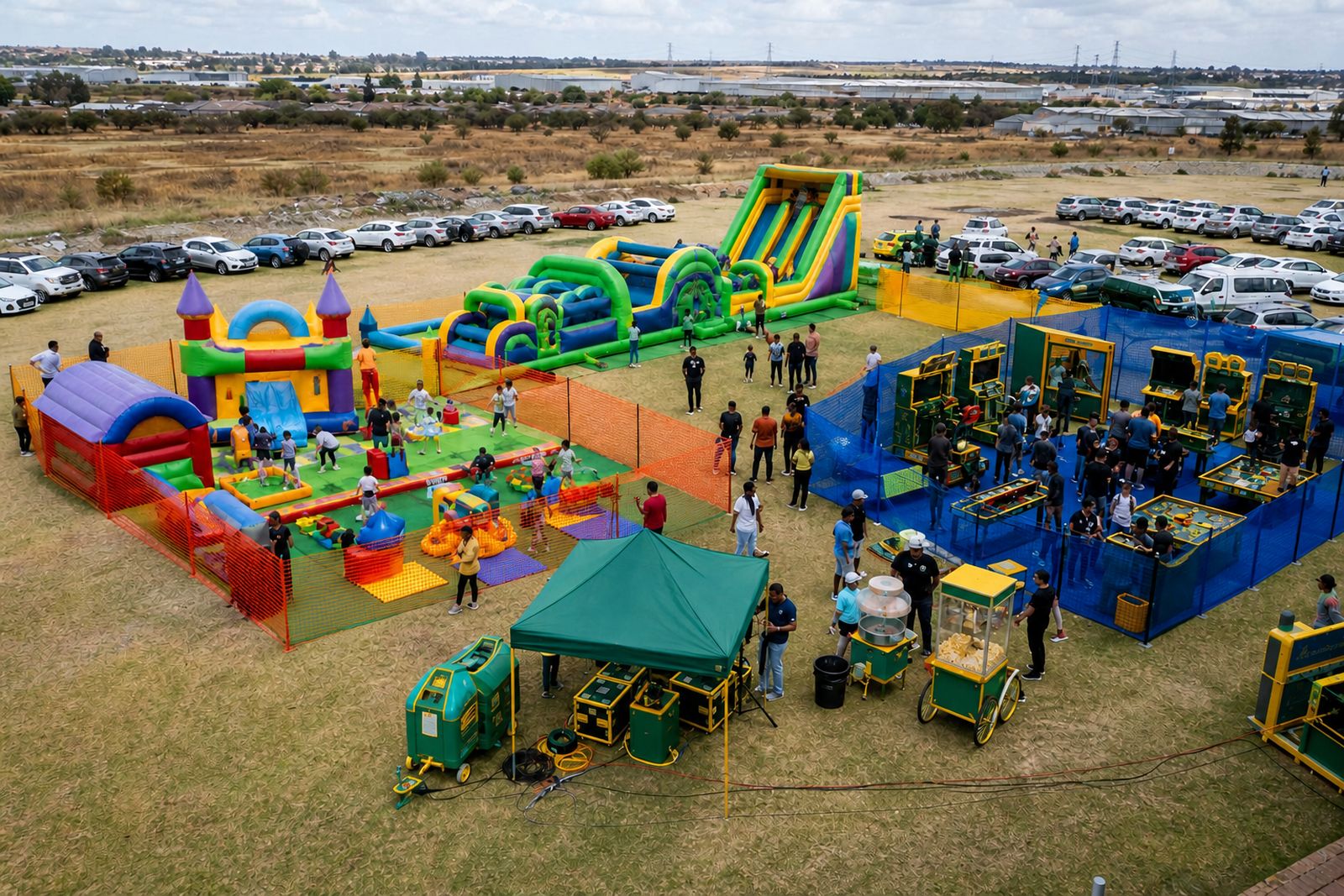
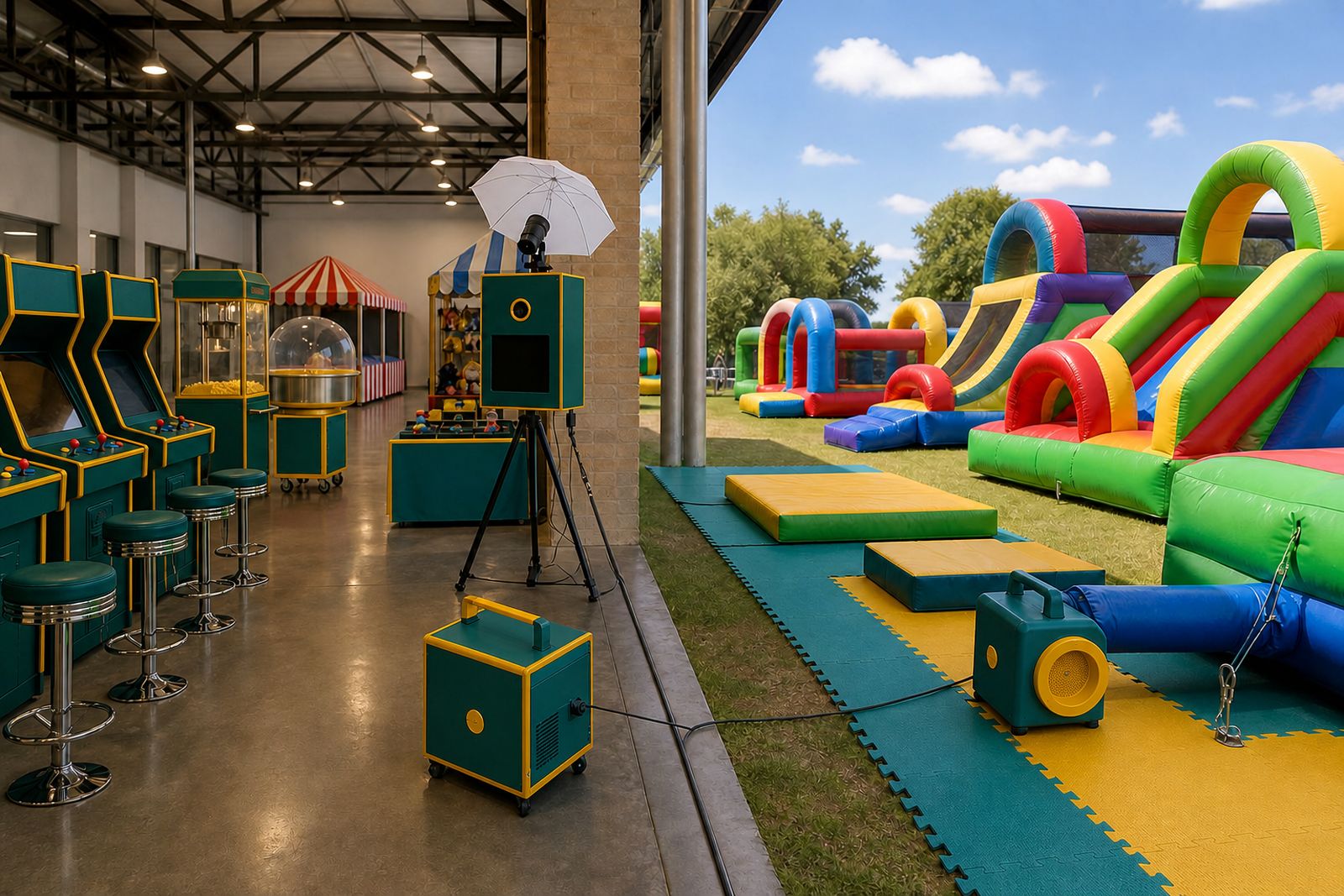
Runoff planning is also about protecting the rest of the event. Carnival games, arcade cabinets and snack carts do not belong in the splash path. Once shoes start carrying water through those areas, the whole site feels untidy and harder to manage.
Splash zones and the shoes people wear to the event
Splash zones are wider than most families expect. A slide may end in one clear landing area, but the spray travels beyond that, especially where children run hard and change direction. The space around the bottom should stay open, with a drying path that lets the next child step in safely. That path should not cross cables, tent ropes or loose signage.
Shoes are part of the drainage plan even when nobody thinks of them that way. School shoes, sandals and slick rubber soles all carry water back into dry areas. If the event includes a stage, a photo booth or a snack cart, damp footwear becomes a floor issue fast. For that reason, many crews ask that children use suitable closed shoes where possible, and they keep spare towels or matting near the entry point.
- Keep spectators a clear distance from the landing pool.
- Place dry mats at the entry and exit points.
- Limit the queue to a surface that can handle repeated wet steps.
- Move backpacks and lunches away from the splash edge.
Power, blowers and the working rhythm of a wet setup
Most wet inflatable units still rely on blowers, so the power side has to stay dry and well managed. The blower should sit on level ground, away from runoff, and the cable path needs the same care as the water hose. If the event site uses a generator, it should be positioned so exhaust and water do not meet, and so the crew can monitor it without crossing the splash area.
Setup time depends on access, surface and size of the unit. A compact slide can go in fairly quickly, while a larger obstacle slide with a long run needs more anchoring and more attention to mat placement. Strike and collection are slower after a wet event because the unit must be drained, dried and rolled in a way that protects the seams and the transport vehicle. Wet fabric packed badly can mildew, especially in humid coastal towns.
In a Midrand road show, that means the crew watches the drainage line right through the programme. If the water starts creeping into a walkway, the route gets adjusted before the site becomes slippery.
Weather changes, short notices and the wet plan on the day
South African weather can change the way a water slide behaves in a single afternoon. Wind pushes spray, heavy rain can flood a low corner, and a sudden chill changes how long children want to stay in the queue. A wet plan should include a safe pause point, a way to reduce water flow and a decision on where to move if the ground stops taking runoff properly.
Our crew should also understand the rules for the site. Some schools want the grass protected. Some malls need clear public walkways at all times. Some corporate venues only allow a water feature if the drainage is kept within a marked area. Those rules affect hose routes, barrier placement and the size of the splash zone. The best events leave enough room to adapt without squeezing the fun out of the site.
At a Pretoria school sports day, for example, a slide beside a field can work well if the landing area stays clear and the runoff is directed away from the running track. The same unit tucked too close to a shaded passage may create a wet corner nobody planned for. That is the difference between a tidy water attraction and a slippery nuisance.
Booking notes that help the crew plan drainage properly
When an event is being booked, the site details matter more than the headline attraction. A simple note about grass, paving, slope, drain covers or nearby foot traffic gives the crew a better starting point. Photos of the intended space help too, because a site can look flat in one angle and actually fall toward a doorway or parking bay.
Useful details to include are:
- Whether the slide sits on grass, paving or a mixed surface.
- Where the nearest tap, drain or water point is located.
- How children will enter and leave the queue.
- Whether there is a dry route for shoes, bags and parents.
- Any surface rules set by the school, mall or venue manager.
Amused works from Midrand across Gauteng and on national road shows, so drainage planning is part of the setup conversation wherever the event lands. The right hose route, a sensible splash zone and good shoe control keep a wet inflatable looking organised rather than messy.