
The ceiling above the fun matters first
An inflatable can look small on paper, then meet a ceiling beam, shade sail or low branch the moment it rises. That is why height clearance is checked before anything else. A jumping castle may need a clear overhead zone that is taller than the unit itself, because the top section, blower ducting and tiedown points all need room.
In practice, crews look at the full vertical path from ground to sky. A hall with hanging lights, a school courtyard with wiring, or a mall forecourt with banners can all reduce usable height. Even a neat lawn can turn awkward if tree branches sweep low across the landing area. The space must be clear enough for safe inflation, safe use and safe striking at the end of the hire.
Trees, shade nets and light strings cause the most trouble
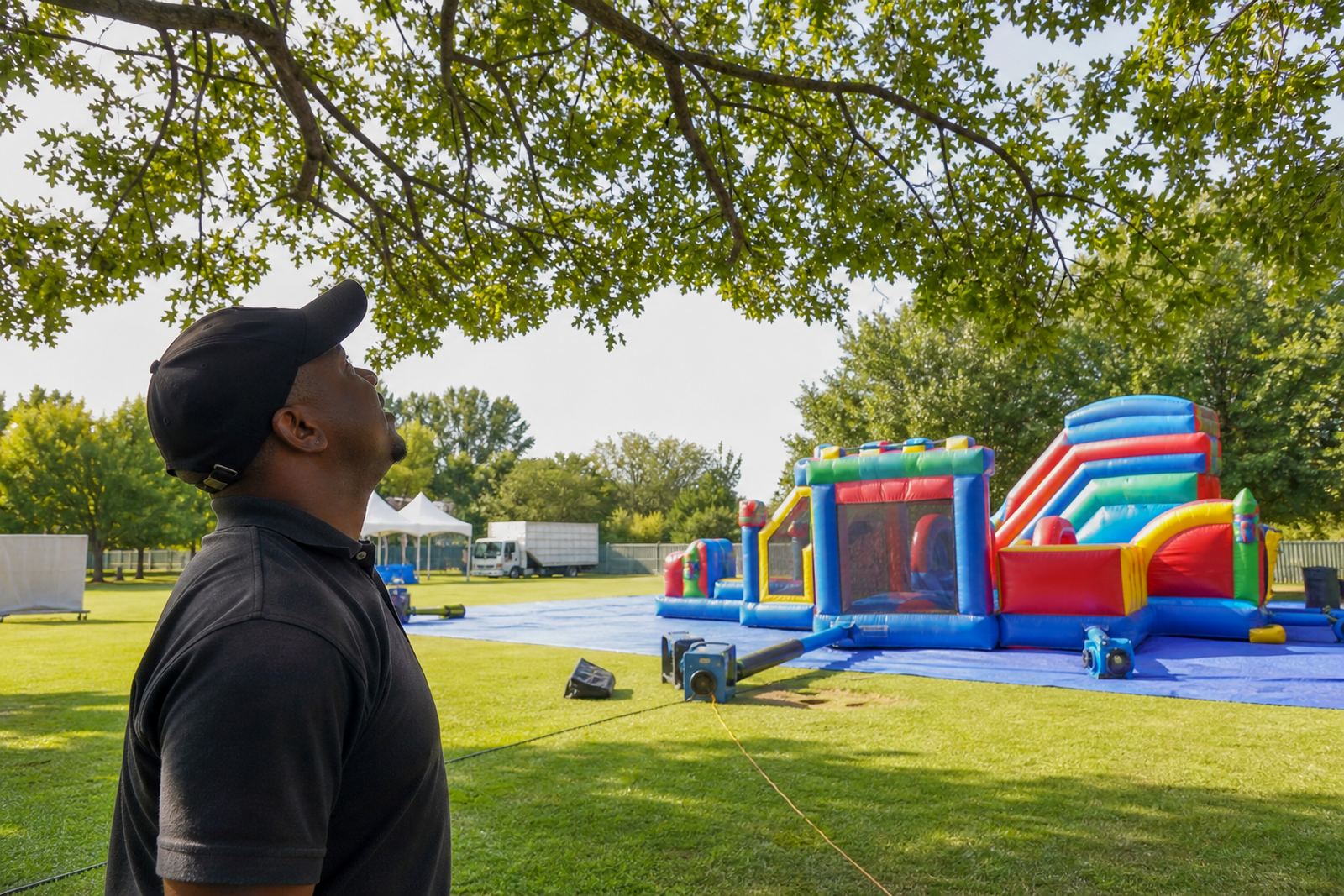
Tree canopies are the first thing many sites forget. Branches that seem high from ground level can sit right in the inflation zone once the castle stands upright. Shade nets and temporary tent lines also sag more than people expect, especially after a windy afternoon in Gauteng. Decorative lights and power drops are another common issue, because they can hang straight through the route where the inflatable rises.
- Low branches can scrape vinyl panels and valve points.
- Shade nets may rub the top seam or sit on safety zones.
- Lights and festoon lines can tangle with blower tubes.
- Hanging decor can reduce the usable entrance height.
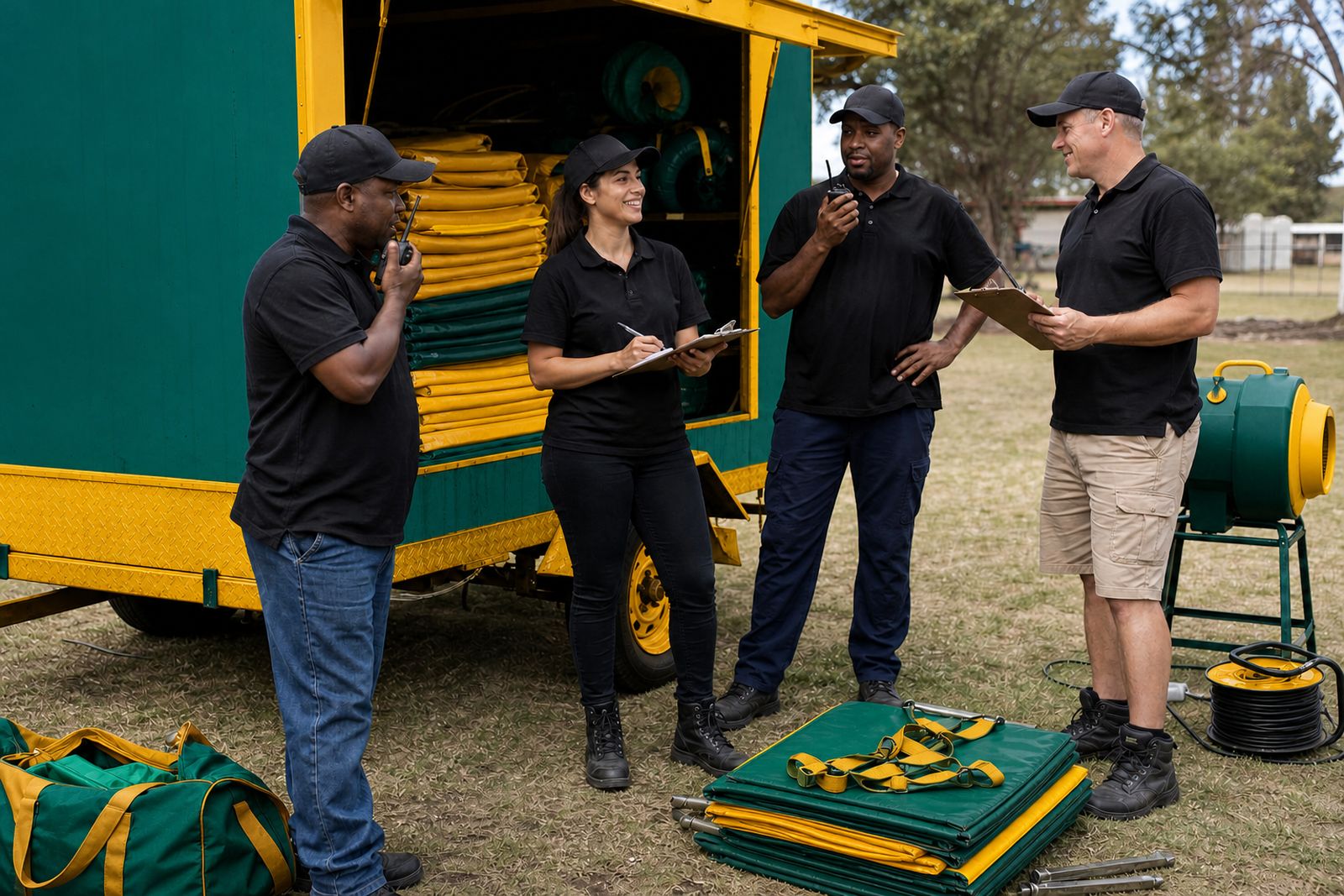
At Midrand schools and function venues, the crew often checks the edges of the space first, then walks the centre line under the expected footprint. That tells them whether the inflatable can stand clear or needs a different position. A few metres of movement can make the difference between a clean setup and a blocked one.
Indoor venues need their own measurement, not a guess
Indoor bookings need careful measuring because the roofline can change from one side of the room to the next. Sports halls, community centres and church spaces may look generous until the castle is inflated and the highest point sits close to a beam, fan or ceiling light. Doors and passage widths matter too, because the unit has to move in before it ever reaches the play area.
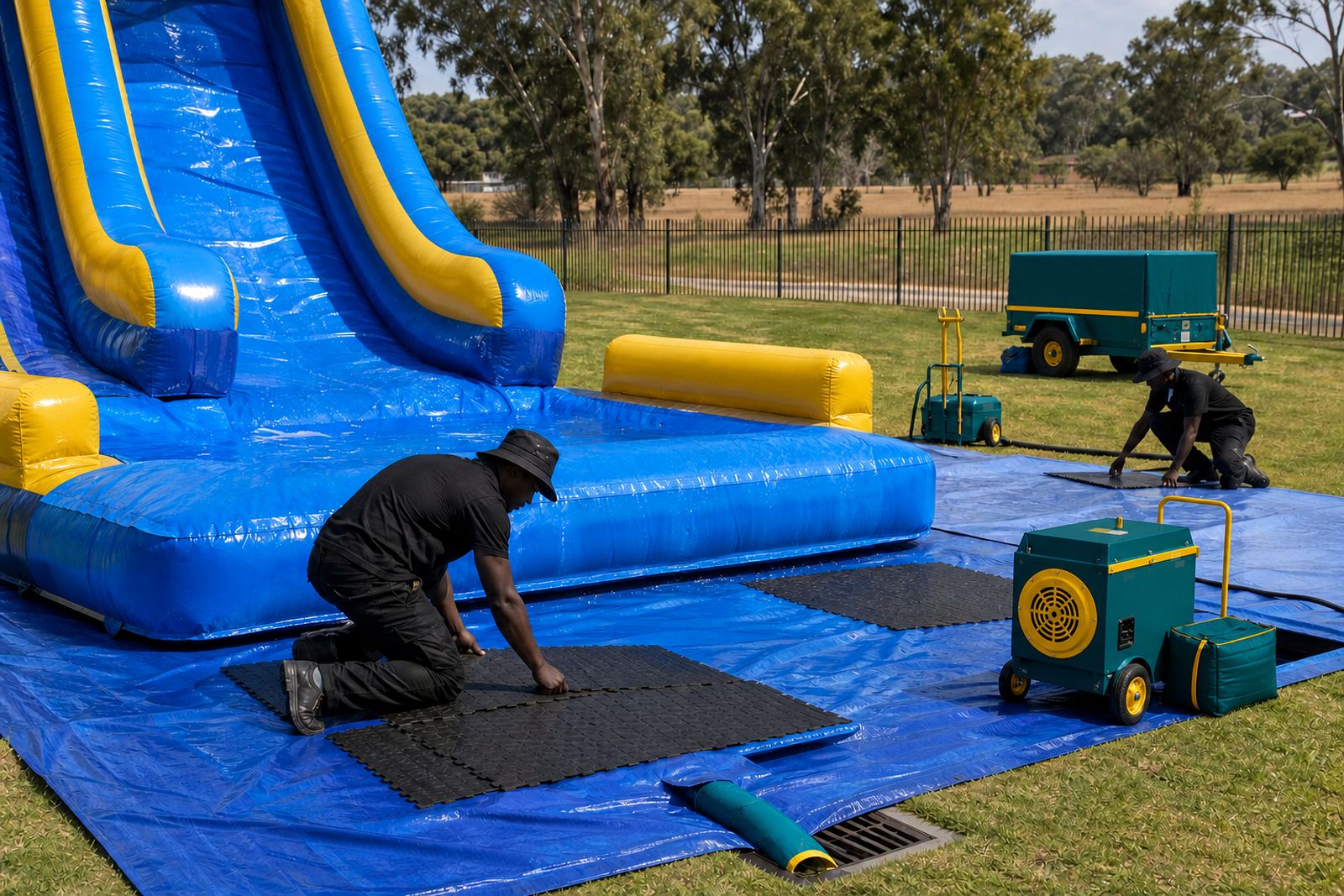
For indoor jobs the crew checks the room height, the distance to walls, and the route from loading point to final position. The floor surface also matters since mats may be needed to protect the ground and soften entry points. If the ceiling is too low, the safer move is to change the unit size or shift to a different amusement that suits the room better.
- Measure the highest fixed point, not the lowest corner.
- Leave room for blowers, cable runs and anchored edges.
- Check doorway widths if the inflatable must pass inside.
- Watch for sprinklers, fans and hanging fixtures overhead.
Ground clearance and anchoring work together
Height clearance is only half the job. An inflatable also needs enough open ground around it for anchoring, mats and movement at the entrance. If the site is tight, the crew may not have enough space to pin the unit properly or place safety mats where children step on and off. That can affect how the ride works and how comfortably the queue moves.
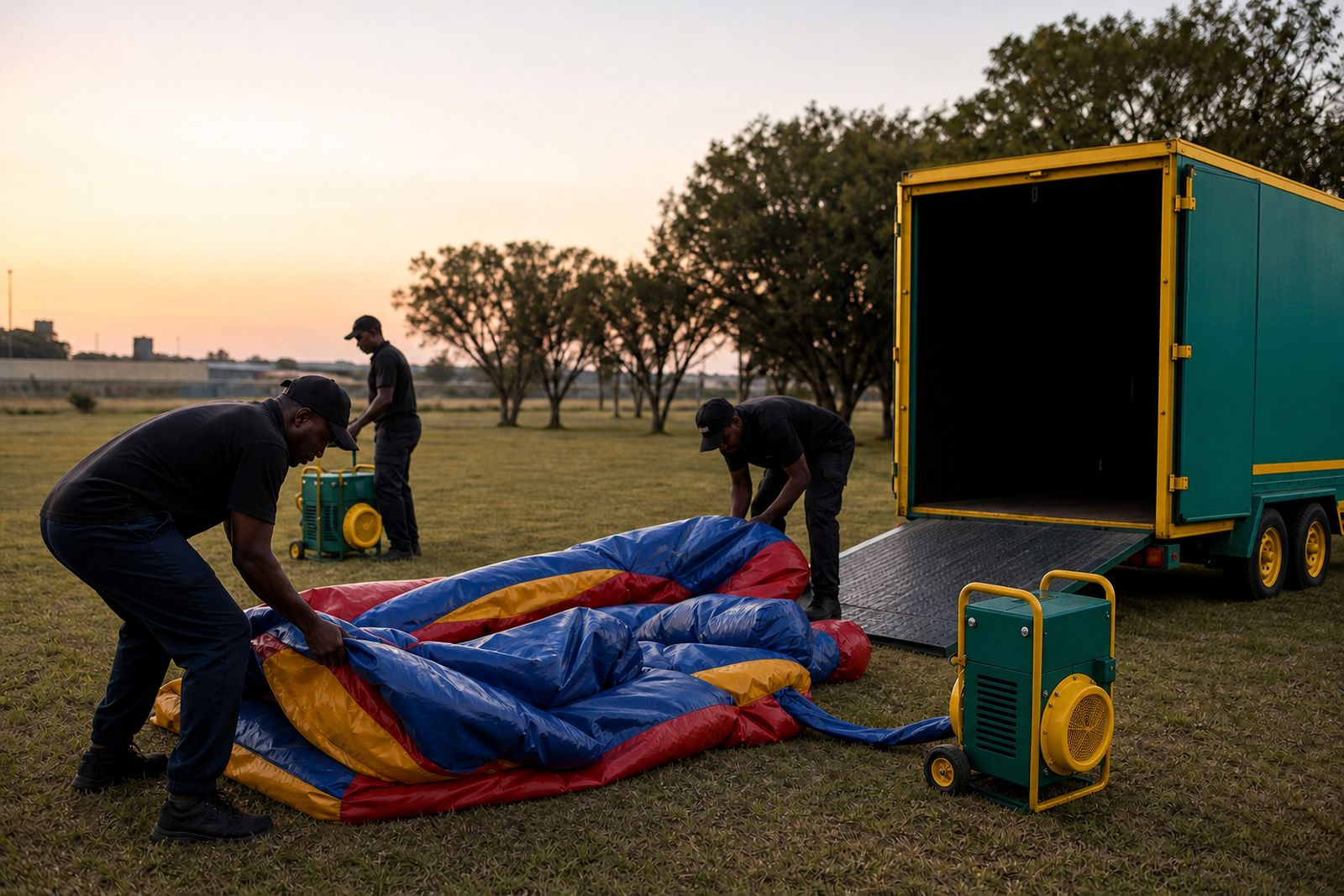
On grass, anchoring usually needs firm soil and enough border space for pegs or weights. On hard surfaces, ballast is used and the crew checks that the layout still leaves clear walking paths. A unit tucked too close to a wall or fence can trap traffic at the doorway. For events with younger children, that crush point becomes more serious because smaller guests move unpredictably when the music starts and the line builds.
A Midrand example with low branches and a shade sail
A school in Midrand may book a jumping castle for a sports day and expect the oval to fit beside the field. On arrival, the crew finds a shade sail stretched across part of the open area and a jacaranda tree dropping low branches on one side. The castle could fit on the ground, but the overhead space near the tree is too tight and the sail line sits right in the inflation path.
In that kind of layout, the safest choice is to move the unit a few metres into a clearer patch and angle the queue away from the branches. If the site still does not clear the top height, a smaller unit or a different amusement may be better for the day. That is also where wet weather plans matter, because damp ground and soft soil can change anchoring and traffic flow very quickly.
- Check trees before the delivery vehicle arrives.
- Keep shade sails off the inflation zone.
- Leave a clear route for crew movement and supervision.
- Match the unit size to the actual open height.
What families and venues should note before booking
Families often ask about the footprint, but overhead clearance deserves equal attention. A back garden may have enough lawn space and still fail because of a low washing line, a pergola, or a patio roof edge. Malls and office parks face the same problem with banners, canopy frames and hanging signage. Once the height is wrong, the hire may need a different position or a different amusement entirely.
A few details help the planning stage go smoothly: the available height, whether the space is indoors or outdoors, the surface type, any nearby trees or fixtures, and whether the event needs supervision, snack carts or extra power planning. That gives the crew enough context to plan the equipment and the route in practical terms.
Clear air above the castle keeps the rest of the event calmer
When the overhead space is right, everything else settles down. The inflatable stands cleaner, the blower runs in the correct position, and the crew can keep the queue moving without squeezing guests under branches or wires. That is the real value of height clearance: fewer surprises on site and a space that works for the children, the organisers and the team running the hire.
For schools, malls, corporate family days and birthdays across Gauteng and the main city routes, height checks are part of the work, not an extra. The same goes for obstacle courses, foam machines and small rides, because each one brings its own vertical needs. A careful look up is often the difference between a tight plan and a smooth setup.