
Why pack-down windows shape the whole booking
A jumping castle or a small ride can be gone in a short window, but only if the route to the site is clear and the crew can work without crowding the last guests. Venues in Midrand, Sandton and Pretoria often want a firm cut-off for music, vehicle movement and gate access, and that affects how the hire is planned from the start.
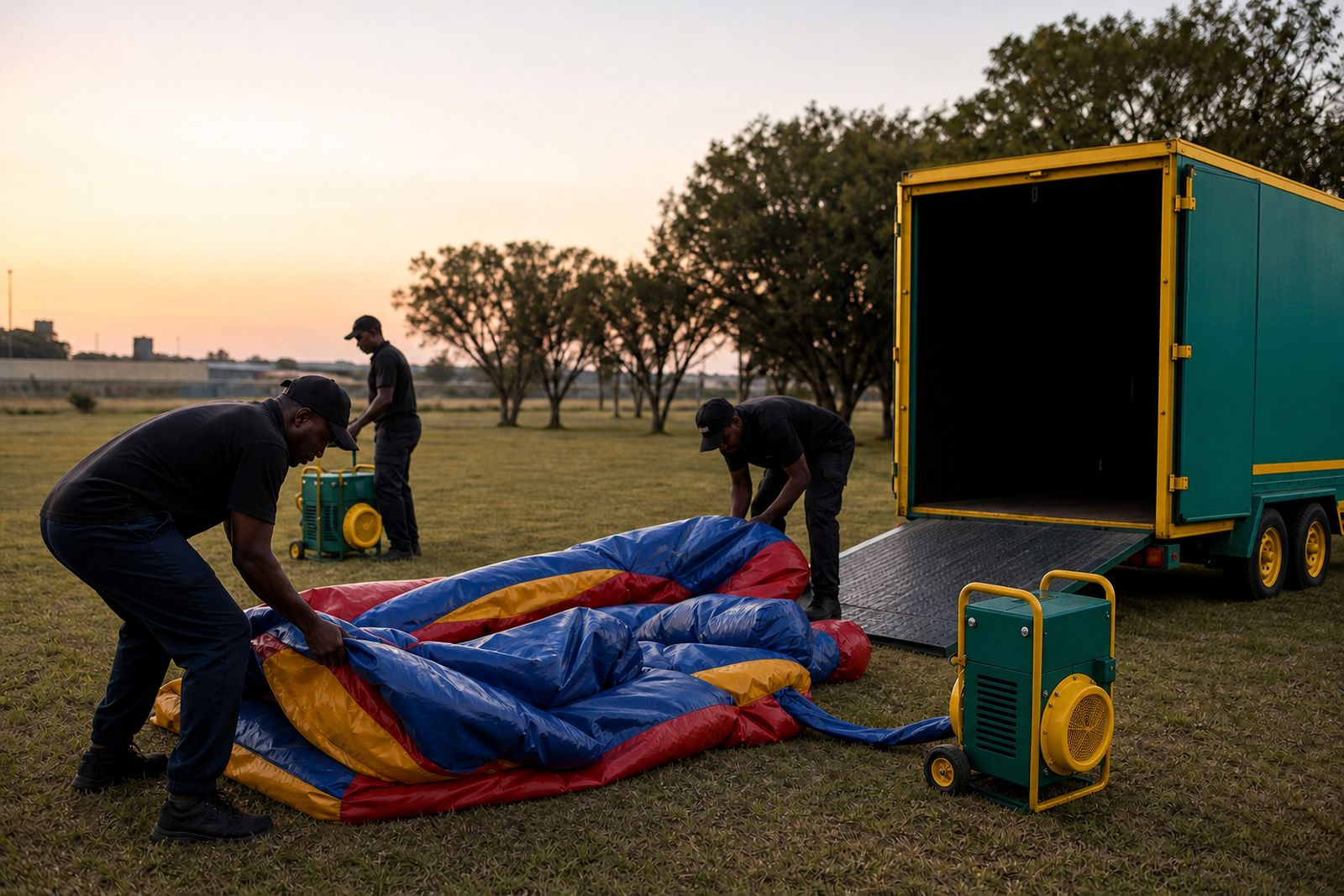
Evening collections matter most at schools, estates and malls where security staff, cleaners and event teams are already on the move. If the exit route is narrow or the function ends near dark, the crew needs space for trolleys, ropes, mats and electrical leads before the last item is rolled out.
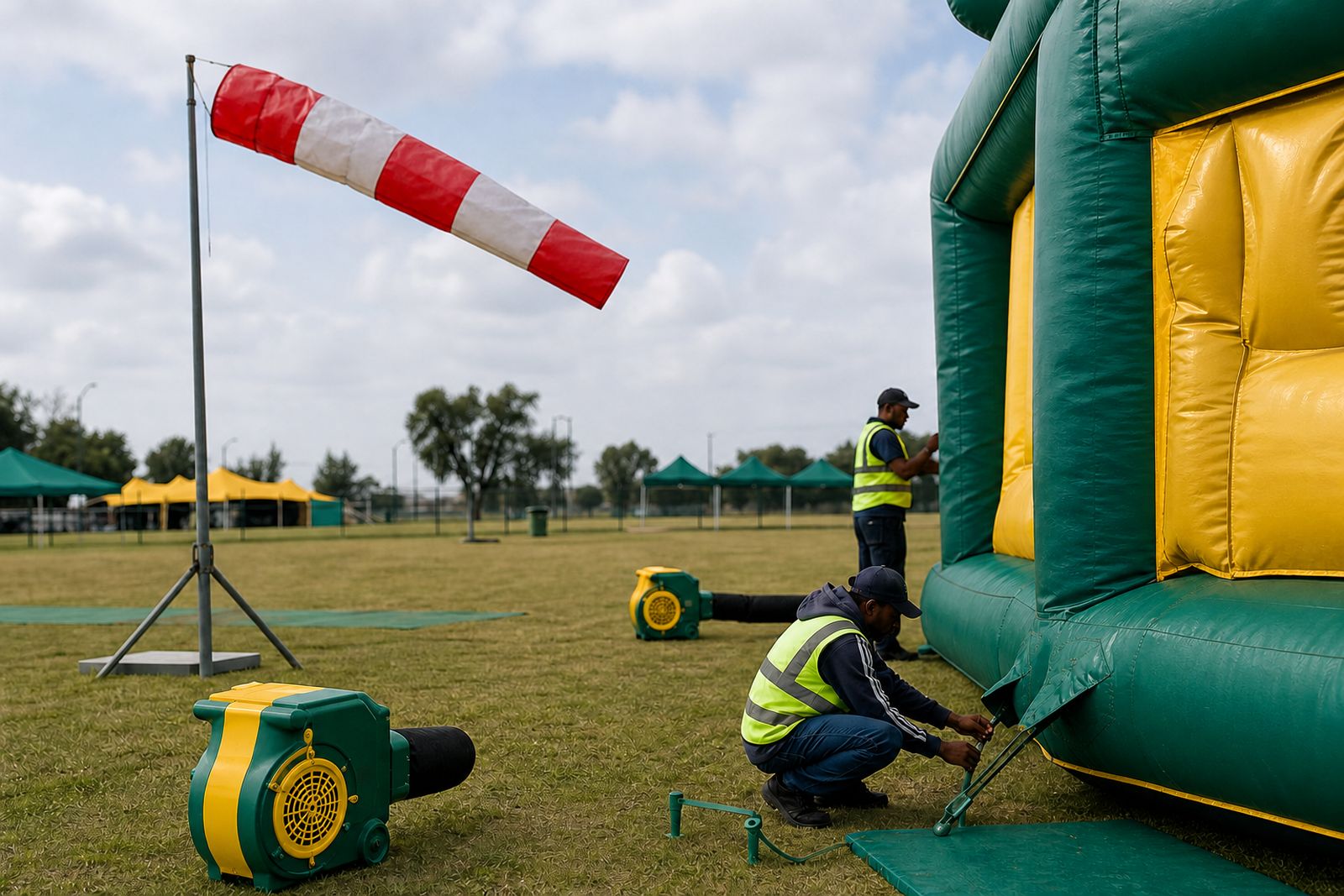
- Castle deflation needs a clean area around the blower point
- Obstacle courses need a clear path for folding sections
- Game stalls and photo booths need loading space close to the venue
- Wet grass, loose gravel or curbs slow the pack-down
What crews look for before strike begins
Pack-down runs smoother when the site check has already covered where the gear sits, where vehicles may stand and which gate opens for collection. A trained crew also watches for crowd spillover, because curious children and guests can slow the work around inflatable anchors, cable runs and snack carts.
For a school field in Bloemfontein or a corporate lawn in Durban, the same habits help: keep the area marked, keep the exit route open and keep the equipment sequence clear. Bigger units usually need more folding space and more hands, while smaller games and candy floss carts can move earlier if the event plan allows it.
- Ground sheets and safety mats are lifted first if they are dry
- Blowers are switched off only after the inflatable has emptied safely
- Tables, stools and queue barriers are removed before the main unit
- Loose items are counted before the vehicle is loaded
Weather, wet grass and the last hour of a function
South African weather can turn a neat pack-down into a slower exercise. A shower over Johannesburg or a gusty afternoon near the coast changes how foam machines, inflatable runs and photo booth frames are handled, and a wet surface also means the crew works with more care around mats and anchors.
When rain arrives late, the site team may shift the order of removal so that electrical items, paper stock and sound-sensitive equipment are protected first. If a venue has strict closing times, that order matters because no one wants guests waiting while crew members try to dry a floor or untangle a muddy cable.
- Wet inflatables are cleaned and packed with extra attention
- Foam and bubble areas need more floor clearing after use
- Generator positions must stay dry and well aired
- Soft ground may need wider mats to protect the lawn
A Midrand road-show example that shows the timing
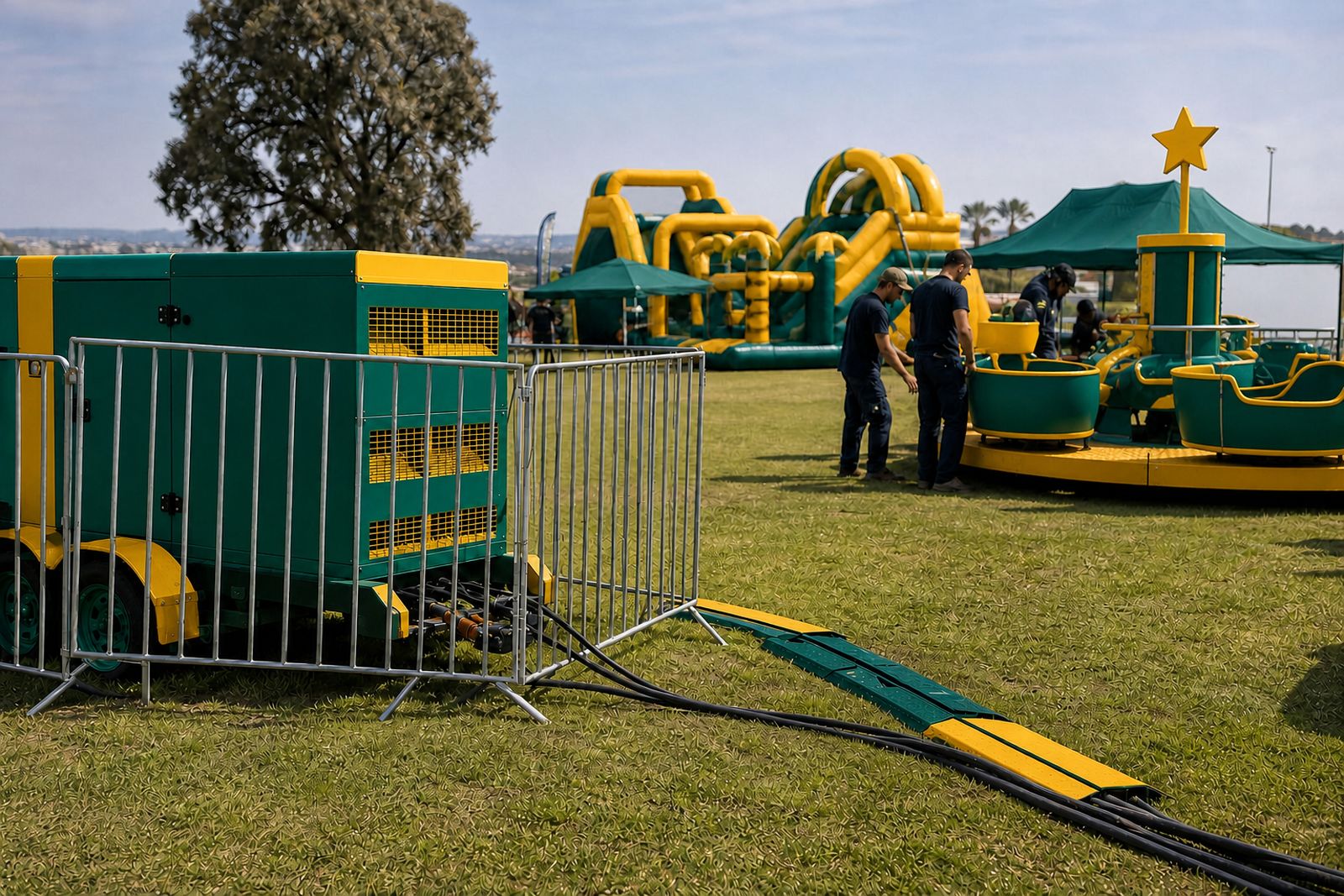
A weekend road show in Midrand can start with a castle, a carnival game row and one snack cart, then finish under a tighter evening gate than the setup enjoyed in the morning. If the venue has shared parking or a public access point, the crew often stages the load-out in sections so that guests can leave without meeting a wall of trolleys.
For a school fair or mall activation, the fastest finish is not about rushing. It comes from knowing which unit folds first, which one needs a blower to clear air, and which items must be wiped before loading because sugar, dust or moisture can travel into the next event.
- Large inflatables are usually stripped of power first
- Game counters and prize stock are boxed before the main frame moves
- Photo booth props are gathered into labelled tubs
- Loading starts where the vehicle has the easiest approach
Space around the trucks matters more than people expect
Pack-down needs room for the vehicle, the folded gear and the crew who are moving between them. Estates, hotels and school halls sometimes have tighter service yards than guests imagine, and that can add strain if the event plan does not leave enough gap for doors, ramps and tail lifts.
A practical layout keeps one side open for the collection crew and another side clear for the venue team. That helps with counting items, checking mats, and making sure snack equipment and arcade cabinets are not dragged across damp grass or rough paving.
- Keep entrance gates unlocked until the last item is loaded
- Reserve a loading bay or nearby curb space if possible
- Mark any fragile floor area before wheels go across it
- Leave enough light for the final count on evening jobs
The handover that protects the venue after the fun
Good strike work ends with the site looking ready for the next user, not just with the truck driving off. That means collecting mats, checking for loose tape or sugar spill, and making sure nothing small has slipped under benches, planters or display tables.
For schools, malls and corporate family days, that final sweep keeps complaints down and protects the event team’s reputation with the venue staff. It also helps when the next booking has an early morning start, because nobody wants to inherit wet canvas, left-behind cones or a forgotten prop bag.
Thabo Jantjies and the Amused team treat strike time as part of the hire itself. When the setup, use and collection all follow one plan, the venue gets cleared properly and the evening does not drift past closing with unfinished gear still on site.