
A ride zone is more than the ride itself
A kiddies ride zone should be treated as a small event area, not a single item dropped on grass or paving. Even the lightest ride needs room for entry, exit, queueing, parent viewing and crew movement, because children arrive in bursts and adults naturally cluster where they can see the action.
At a school fair in Midrand, for example, a small ride can sit comfortably beside a snack cart and a shaded seating strip, but not in the middle of a narrow walkway. Once people start crossing through the operating space, the line becomes messy and the crew has to keep stopping the ride.
- Leave a clear boundary around the ride footprint.
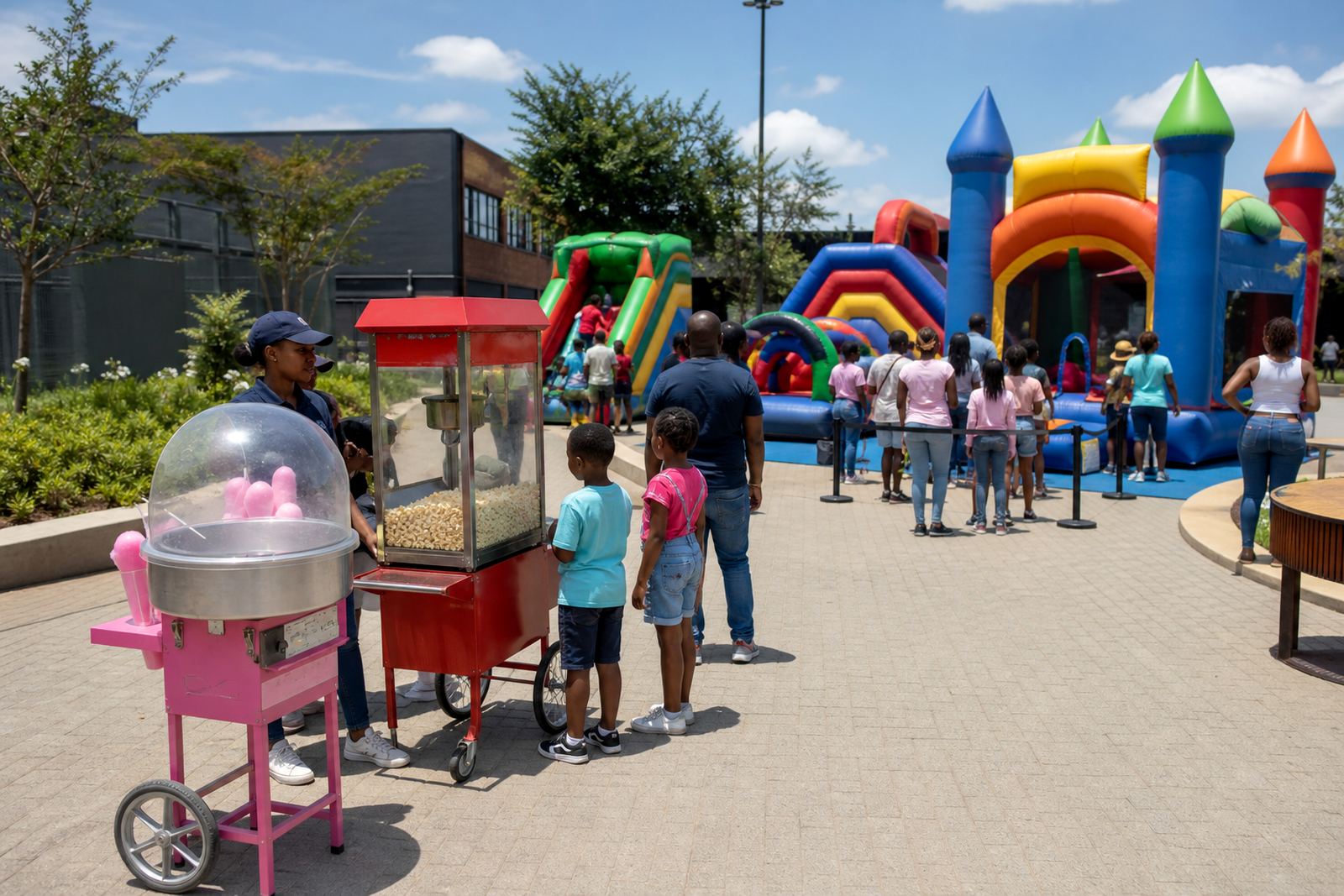
- Plan a separate line for children waiting to ride.
- Keep strollers and bags out of the loading side.
- Give supervisors a full view of the queue and the exit point.
Barriers keep the edges honest
Barriers do not need to be heavy or complicated, but they do need to be obvious. A visual edge tells children where to wait, where to step out and where not to push through, which matters a great deal when excitement rises and parents are trying to film at the same time.
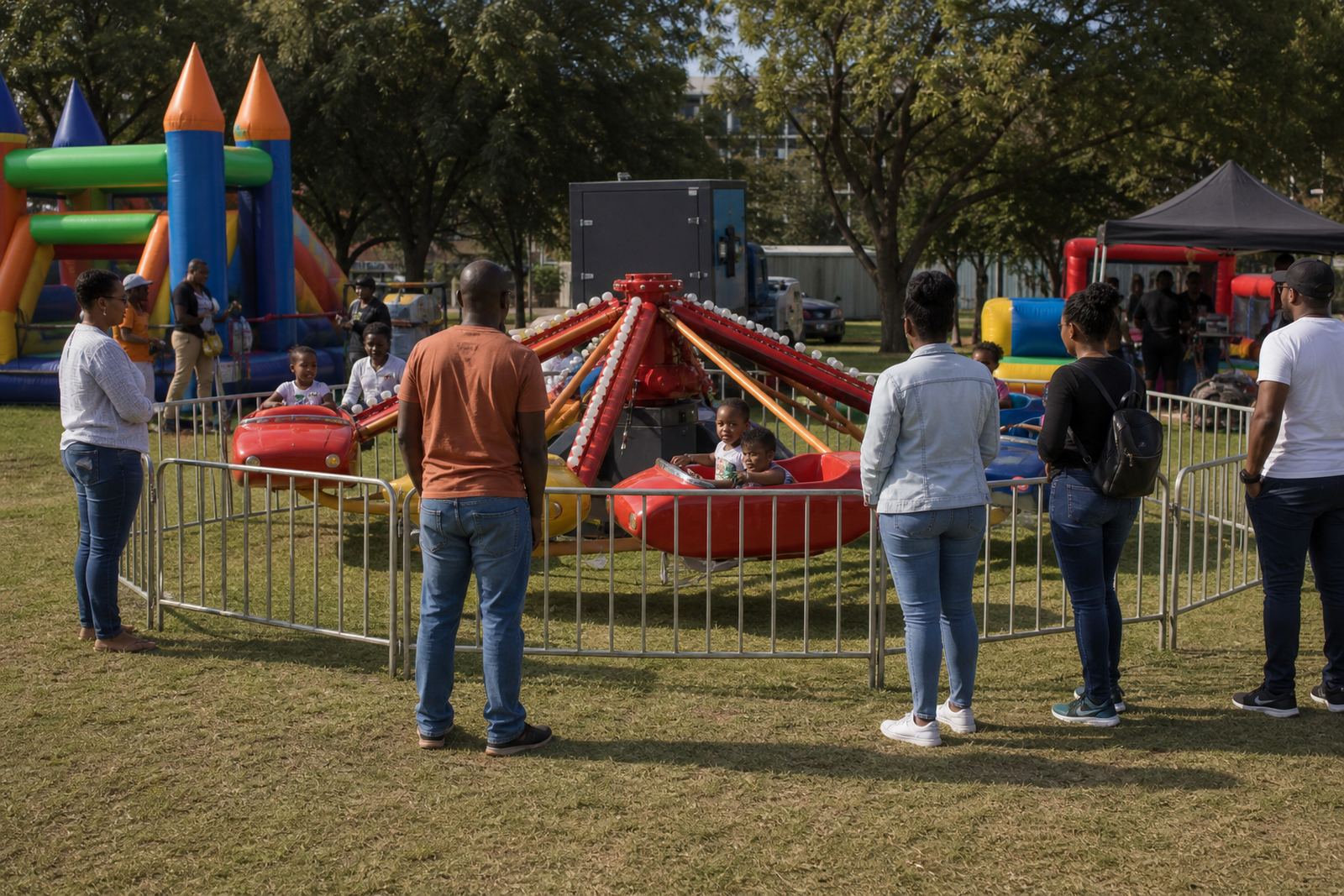
For many small rides, low barricades, stanchions, ropes or a marked lane work better than a loose crowd ring. The aim is to create a clean operating pocket with one open side for loading and one controlled point for supervision.
- Use barriers that are visible from a child’s eye level.
- Keep the entry point wide enough for safe boarding.
- Prevent spectators from standing directly behind the ride.
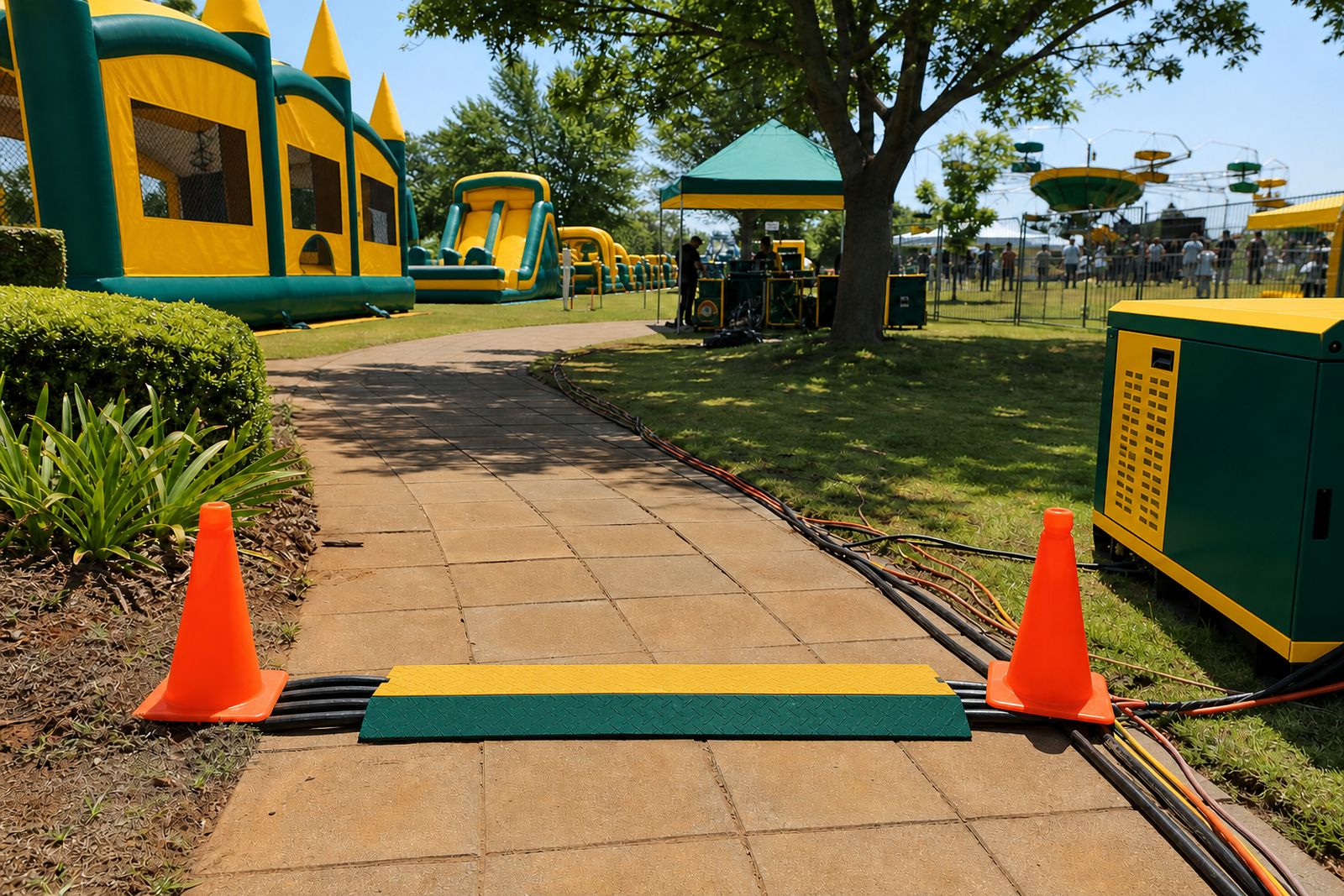
- Mark no-go areas near moving parts and cables.
Space for loading, turning and collection
Loading space is often the part that gets overlooked. Small rides still need a clear strip for children to step on and off without squeezing past a queue, and the crew needs room to check harnesses, belts or lap bars where those are part of the attraction.
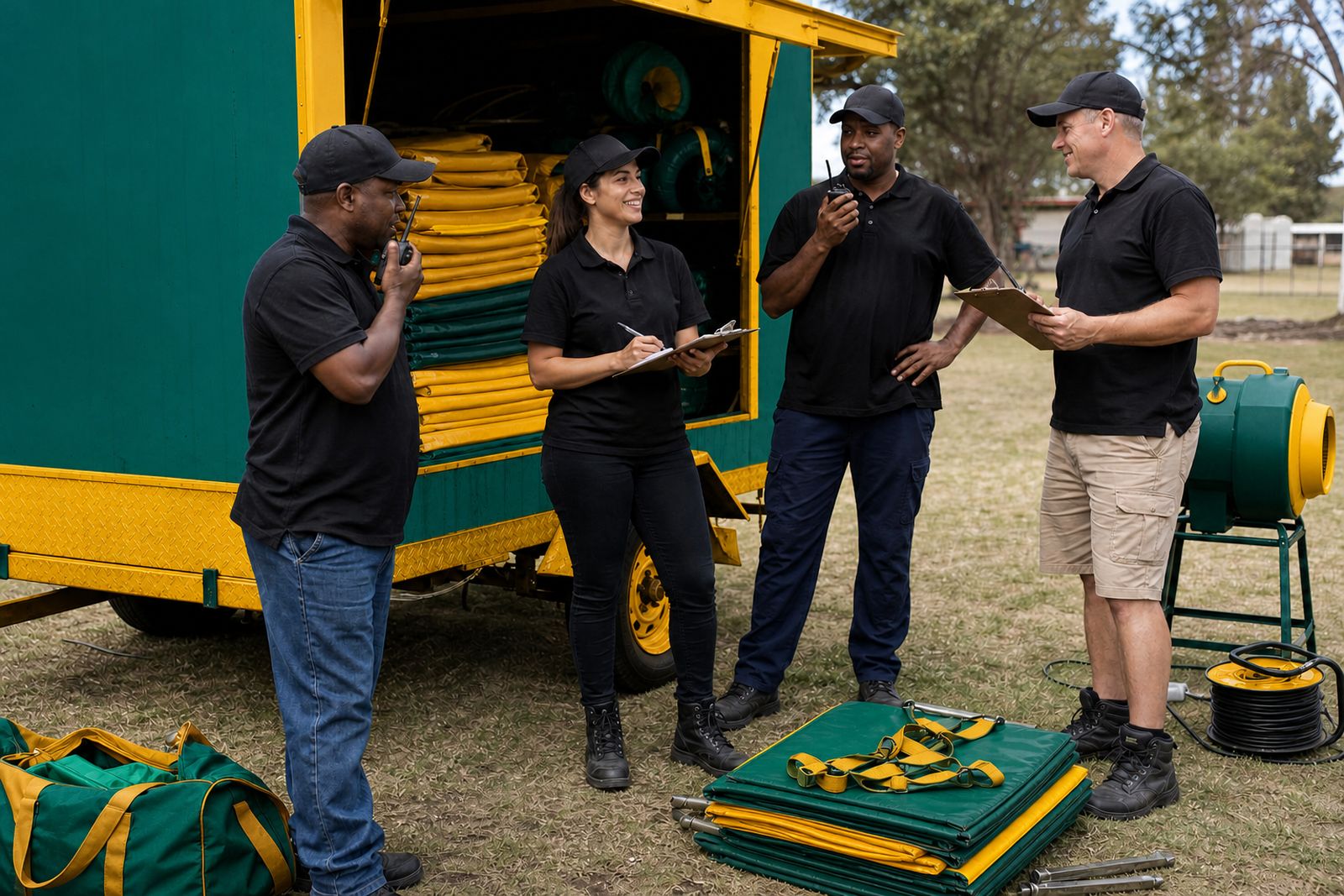
There is also the practical matter of getting the ride into place. Access paths should allow trolleys, hand-carry movement or vehicle offloading, depending on the item. On a busy Saturday in Sandton, a tight service gate or crowded curb can add friction before the fun has even started.
When the area is planned properly, the ride can run in a steady rhythm instead of pausing every few minutes for a child to be guided around a pole, a cable or a crowd knot.
Parents need a line of sight, not a guessing game
Clear parent viewing areas make the whole zone work better. Adults want to watch faces, take photos and keep younger children in sight, but they also need a place that does not block the operator or create a crush at the rail.
A good viewing area sits just outside the operating boundary, with enough space for a chair or two, prams and the occasional handbag drop-off. It should feel close enough for comfort and far enough to keep the loading side free.
- Place viewing spots opposite the main entry if possible.
- Avoid placing parents behind the ride mechanism.
- Keep the photo line separate from the boarding line.
- Use shade where the event runs through the heat of the day.
Power, mats and weather planning matter on small rides
Many kiddies rides and linked amusements rely on mains power, blowers or small electrical systems, so the power route has to be mapped before setup begins. Cables should run neatly and out of foot traffic, with protection where children may step, trip or tug at loose ends.
Mats help soften the step onto hard ground and give the area a cleaner finish on paving or packed soil. If the ride is inflatable or paired with an inflatable queue zone, anchoring points must be correct for the surface, especially where wind can move across open school fields or mall forecourts.
Wet weather planning is part of the job too. A ride that is safe in dry conditions may need to pause, be covered or be relocated if rain makes the floor slippery, and a fairground style setup should always account for that before guests arrive.
A local setup from Midrand to wider Gauteng
On a family day in Midrand, a small ride zone might share space with carnival games, candy floss service and a photo booth, but each part still needs its own edge. That layout keeps the queue from spreading across the whole lawn and helps the crew keep children moving without confusion.
For schools, malls and birthday parties, the best arrangement is usually the one that lets adults see the whole area at a glance. The ride stays visible, the children stay supervised and the loading point stays open. That is especially useful when the event has mixed ages, because younger children need closer guidance than older ones.
Across Johannesburg, Pretoria, Durban, Cape Town and Bloemfontein, the same basics hold true: protect the edges, reserve the loading space and keep a clean parent line. A small ride feels bigger, and safer, when the zone around it has proper order.