Begin with the floor plan before confirming bookings
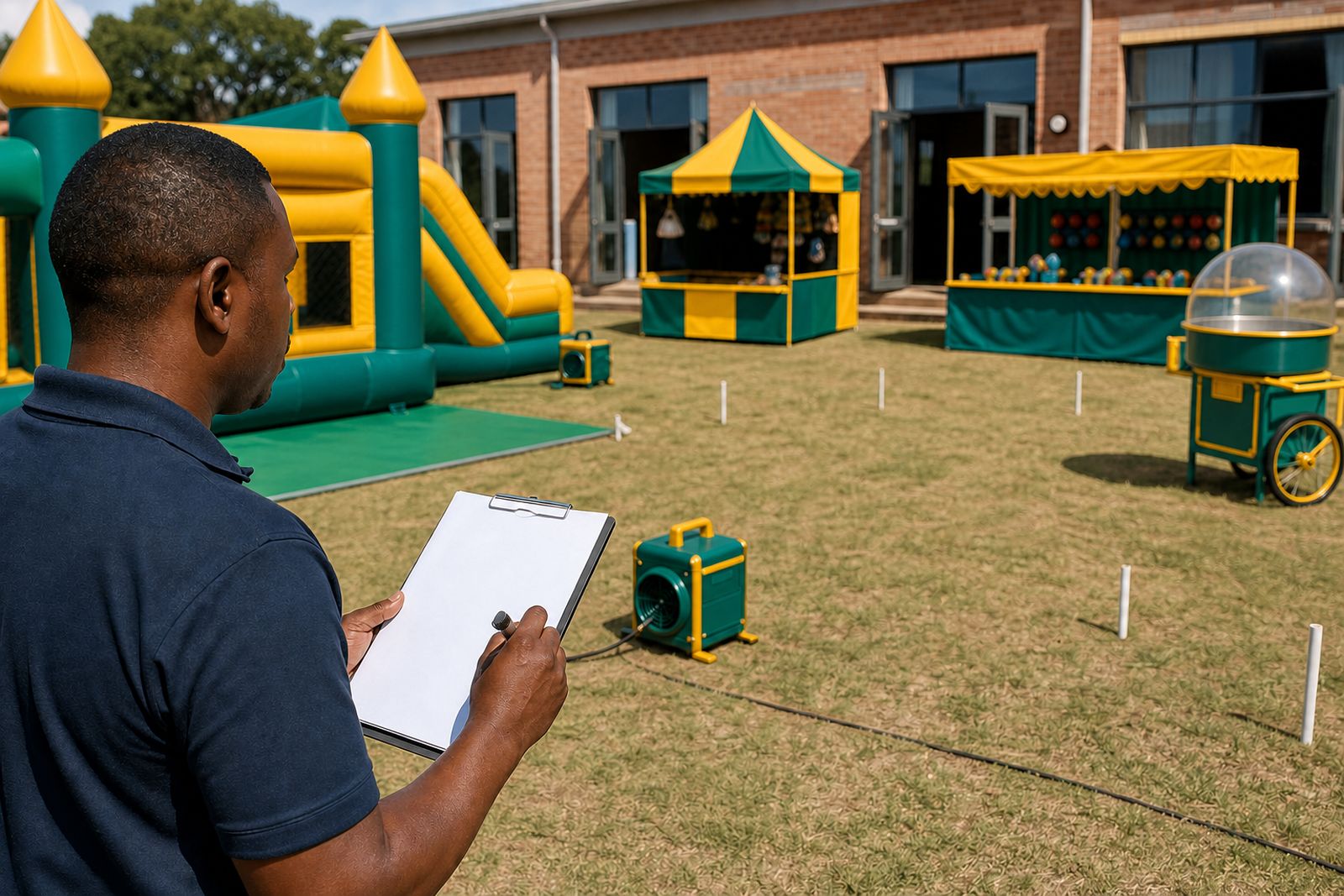
A mall event works best when the usable floor is mapped before anything is loaded off the truck. Measure the open area, count door widths, note ceiling height and mark fire exits, service corridors and any spots where public traffic must keep moving.
Most indoor amusements need more breathing room than people expect. A small jumping castle can suit a compact court, while an obstacle course, photo booth cluster or arcade line needs extra space for waiting guests and clear access for crew movement.
- Keep emergency routes open at all times.
- Leave room for prams, wheelchairs and trolleys.
- Check ceiling sprinklers, lights and hanging signage.
- Map out where the queue begins and where it finishes.
Which amusements fit a mall court
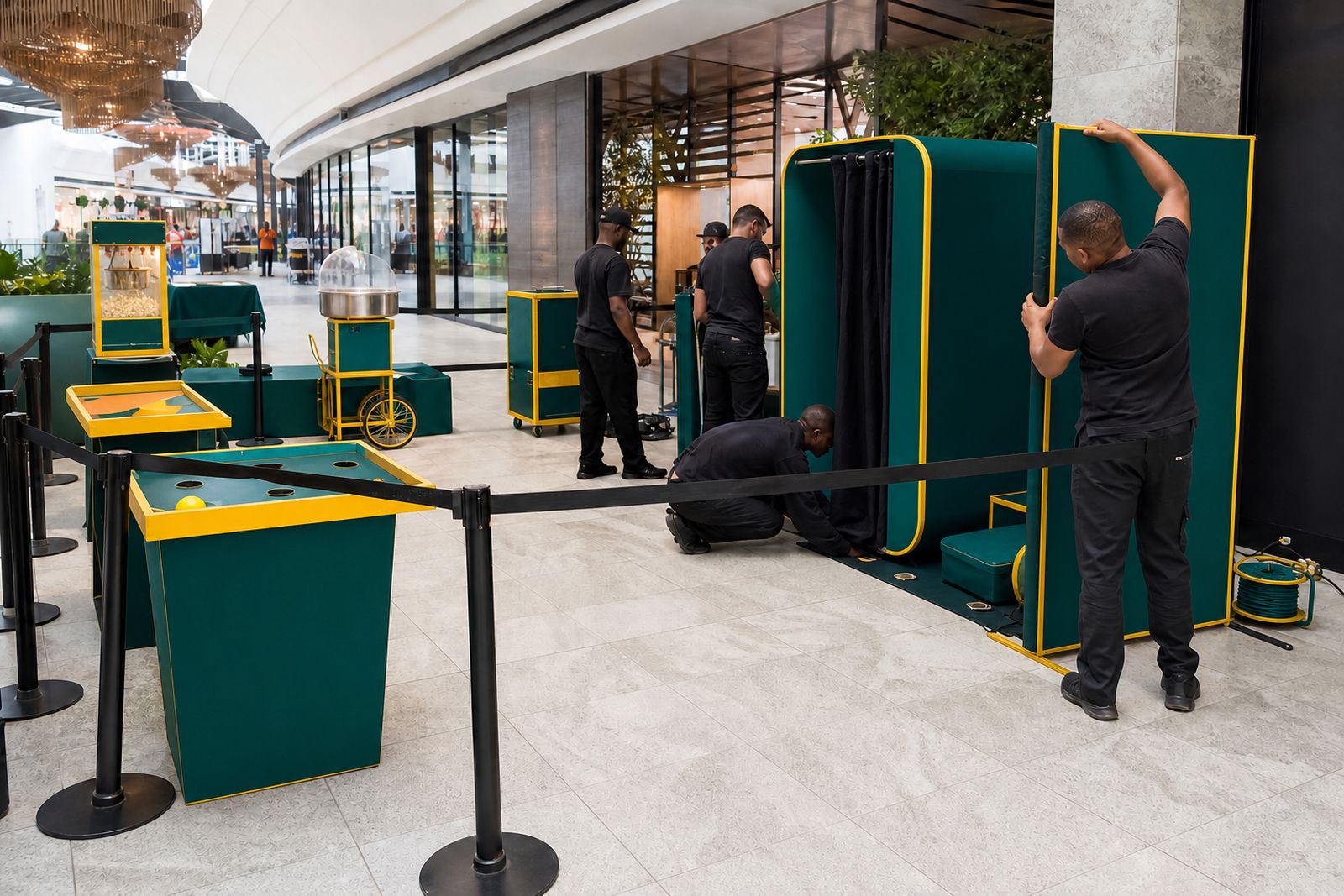
Not every attraction suits every corner of a centre. Indoor spaces work well for arcade cabinets, retro gaming stations, candy floss and popcorn carts, small carnival game stalls, photo booths and mascots moving through a managed route.
Inflatables can work indoors if the ceiling height, floor loading and access route are suitable. They need blower placement, anchoring or weighted fixing where allowed, safety mats at the entrance and exit, plus enough room for staff to guide children safely on and off.
- Choose age bands that match the site and crowd.
- Use height limits where ride or game rules require it.
- Keep smaller attractions near the busiest walkways.
- Place louder items away from tenancy entrances.
Queues that move without blocking trade
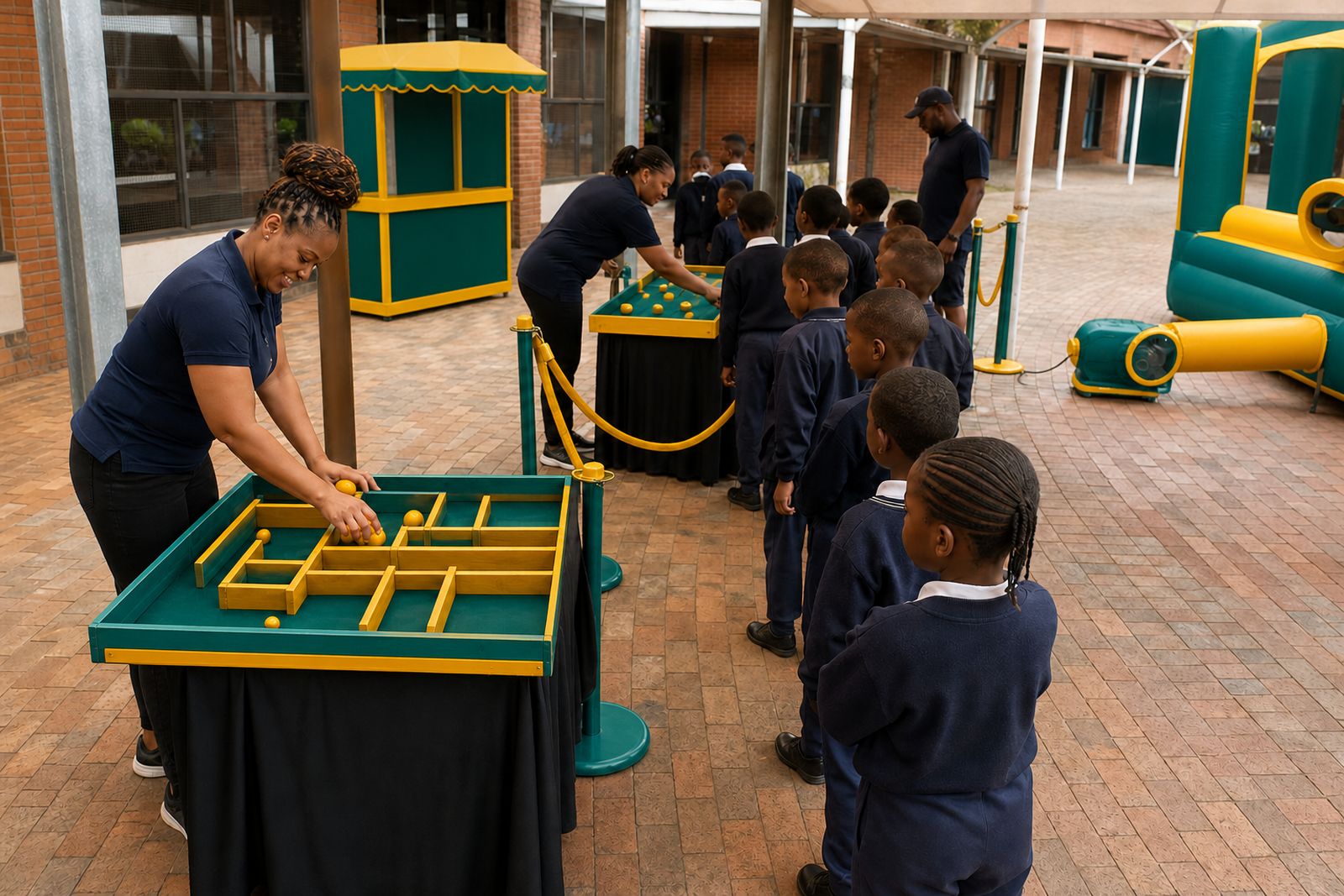
Controlled queues matter in malls because the event sits inside normal trading traffic. Barrier lines, floor markers or stanchions help keep the route neat, while a crew member at the front can manage entry, age limits and turn-taking without blocking passing shoppers.
For carnival games and arcade machines, short play cycles work better than long ones. Children and parents should know where to wait, where to collect tokens or tokens-style cards if used, and where to stand once a turn is finished. That keeps the line moving and lowers pressure around shop fronts.
- Use one entry point and one exit point where possible.
- Separate fast activities from photo stops and snack carts.
- Keep clear sightlines so parents can watch from outside the queue.
- Allow extra space for school groups arriving together.
Power, blowers and weather backup notes
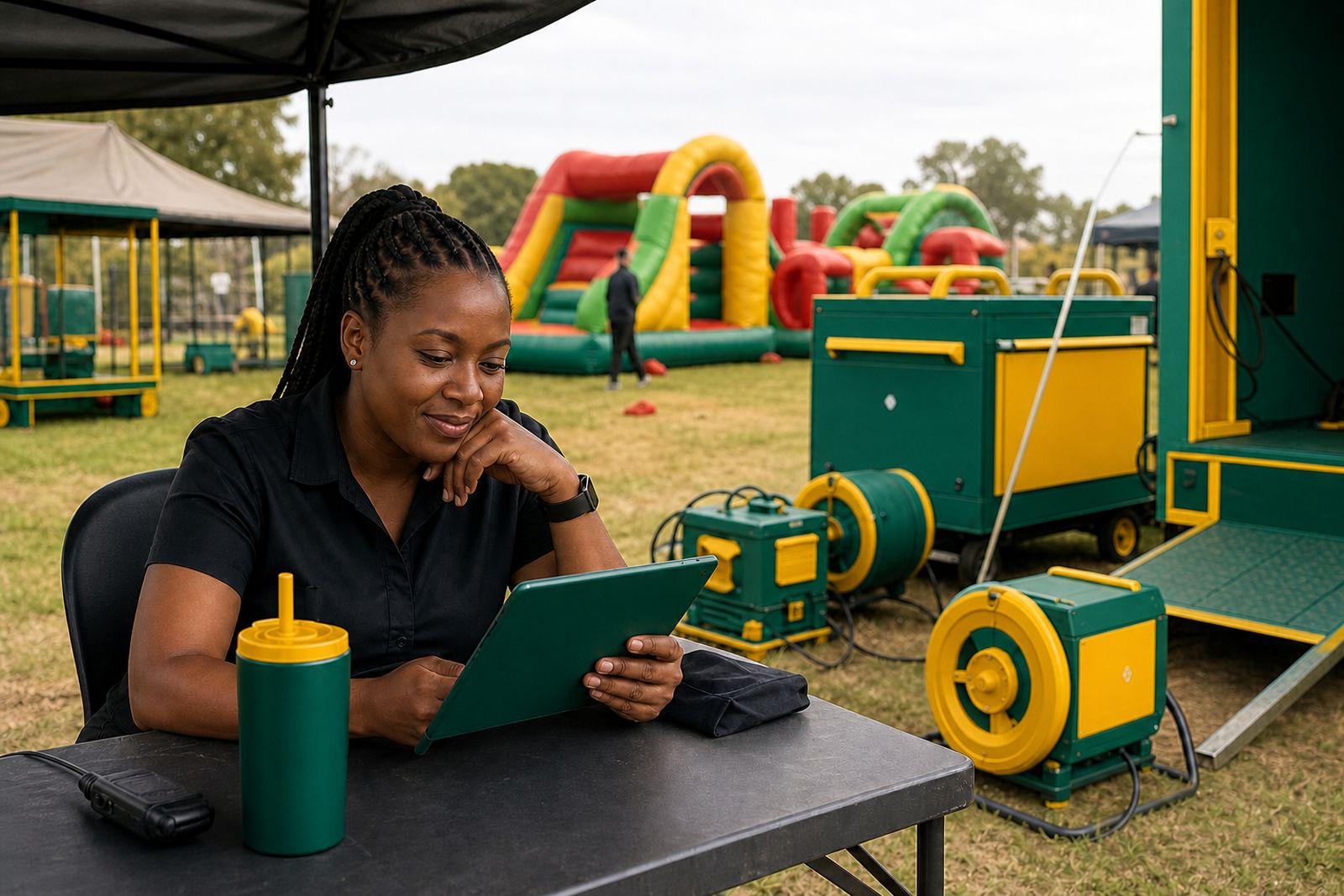
Indoor events still need proper power planning. Arcade units, photo booth equipment, foam or bubble machines and snack carts may share circuits, so the load should be split carefully. Blow-dried inflatables need a steady supply, secure cable runs and plugs that stay out of public walk paths.
Where the centre allows it, a generator can support outdoor spillover areas or road show features outside the main concourse. Wet weather plans also matter for entrances and loading bays, because rain can affect crowd flow, mat placement and collection timings even when the event itself is inside.
- Check which items need mains power and which do not.
- Keep cables taped or covered where people walk.
- Allow a dry route for loading and strike.
- Set a backup plan for wind, rain or access delays.
Supervision, safety mats and on-site control
Trained crew members do more than set up equipment. They watch the line, guide children, manage turns, check mats and keep an eye on anchoring points, loose shoes, food spills and crowd pressure around the attraction.
Safety mats should sit at entrances, exits and any place where small feet climb on or off a platform. For inflatable units, the crew also checks blower position, seams, tie-downs and the surface underneath. For mascots, the route should stay open and the costume breaks should happen away from the main crowd.
- Match each attraction with a clear staff role.
- Keep snack service separate from active play zones.
- Watch for slick floors near drinks or foam effects.
- Use simple rules that staff can repeat to visitors.
Booking steps for mall managers and event teams
Start with the site dimensions, trading hours and the type of audience expected. A family day, school promotion or festive mall activation may need different space, different heights and a different mix of games, snacks and photo stops.
After the site note, the next step is to confirm the delivery route, setup time, collection window, power needs and whether the centre wants any extra supervision points.
- Share the indoor footprint and ceiling height.
- List the attractions needed and the age group expected.
- Note power points, loading bay access and security rules.
- Confirm if the event needs queue management or snack service.