
Start with the ground, not the forecast
Begin with the surface, because rain changes the site faster than people expect. A lawn that looks firm in the morning can soften by midday, and a paved court can collect standing water near drains, kerbs or low spots. Walk the area with the crew and mark where water will gather, where guests will queue and where the anchor points can hold properly.
For jumping castles and inflatable obstacle courses, the crew needs enough open space for the body of the unit, the blower line and the safety zone around it. Soft ground usually needs pegging or other anchoring, while hard surfaces need weights or another approved fixing method. Safety mats at the entrance and exit help when the ground is damp, and they matter even more when children are moving in socks or slippery shoes.
Decide early which items suit damp weather
Not every attraction handles a wet day in the same way. Some equipment can work under cover if the floor stays dry and there is space for queues. Other items need a full pause, especially where electrical parts, paper tickets, or loose game pieces would suffer in rain.
- Inflatables need stable anchoring and a clean dry floor around the entry point.
- Carnival games work better under a tent or roof with clear walking lanes.
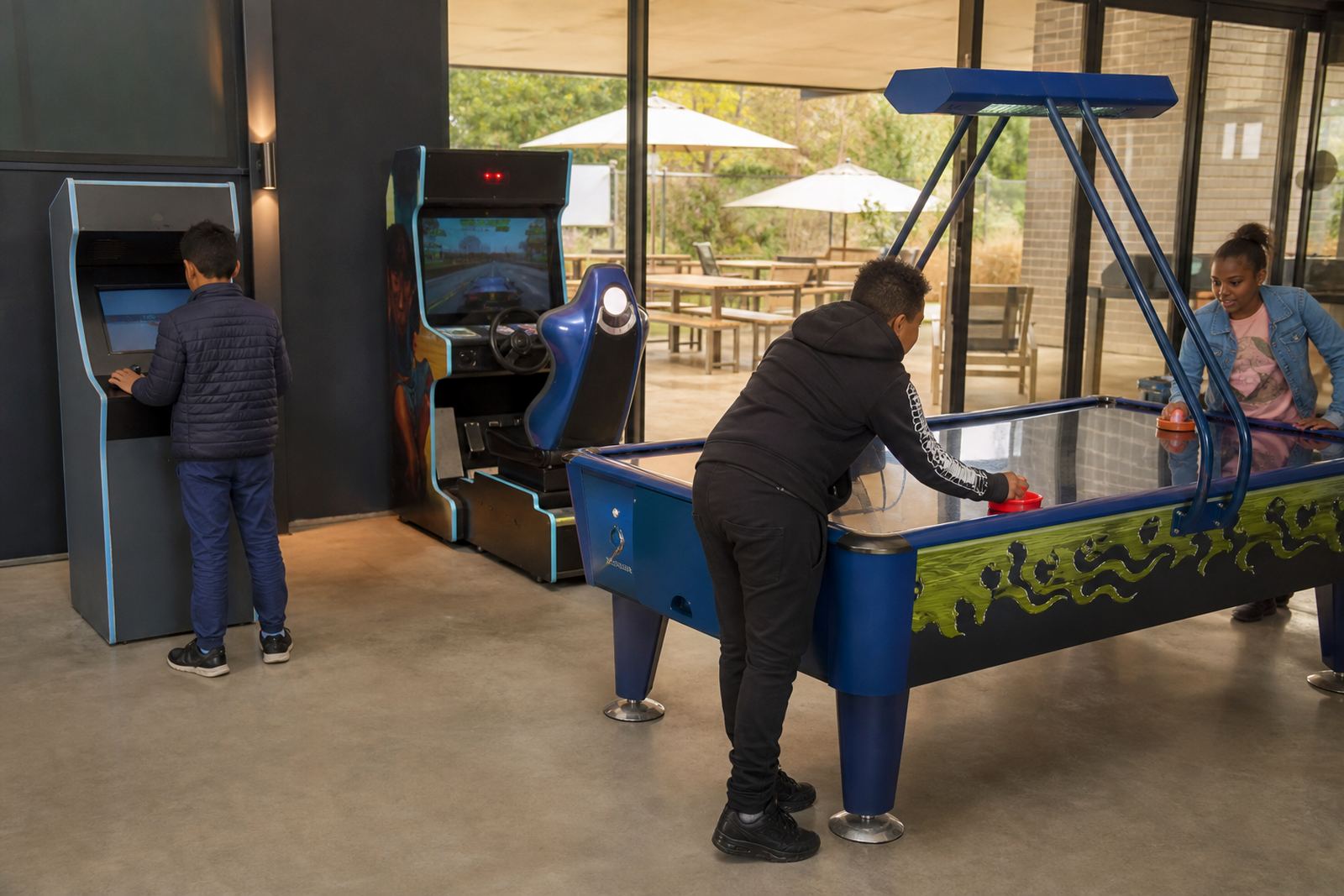
- Arcade cabinets and retro gaming machines need dry floors and sheltered access.
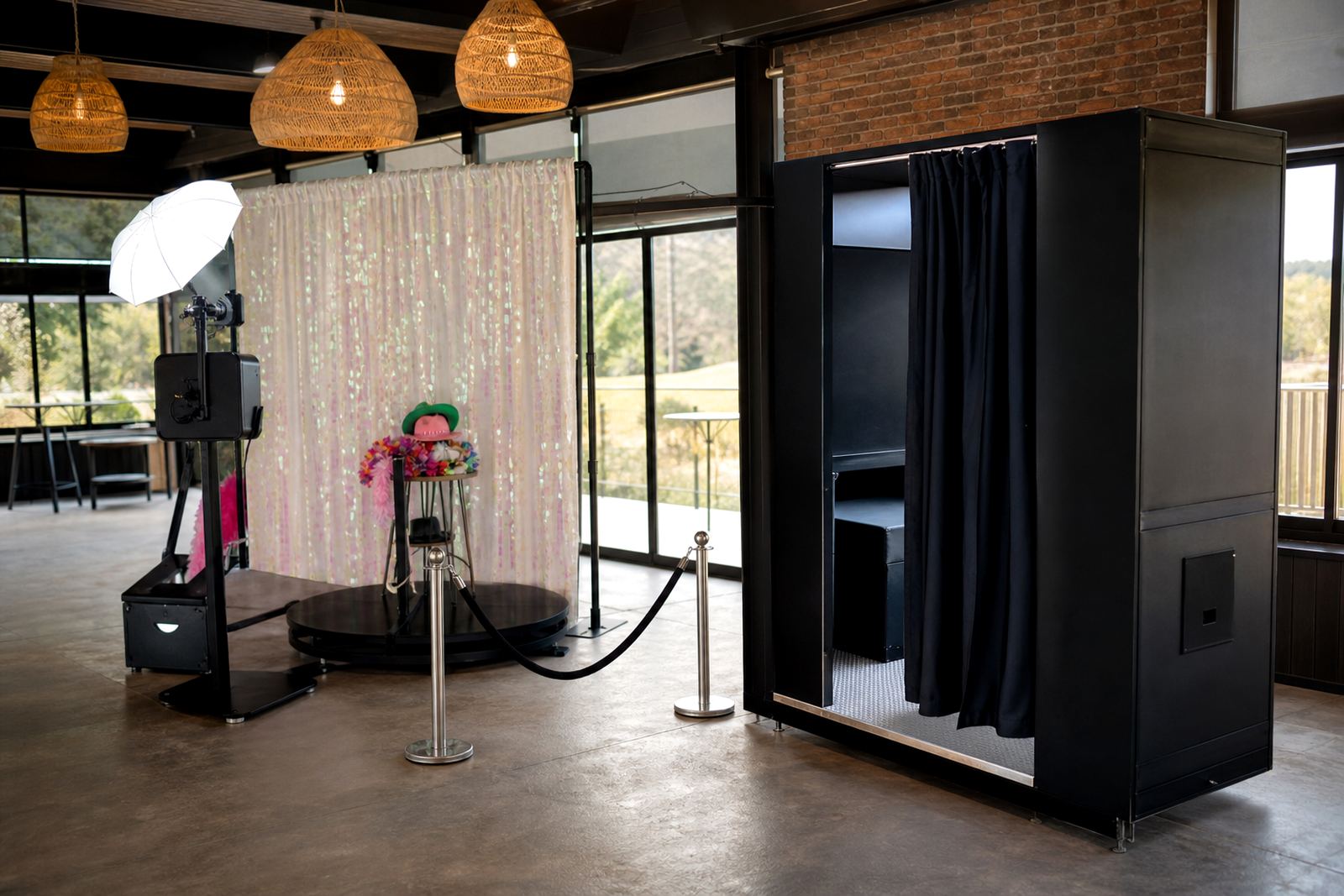
- Photo booths need a level area, lighting and a roof or indoor position.
- Candy floss and popcorn carts should stay out of wind and drizzle.
- Foam and bubble machines need a plan for slippery floors and drainage.
A good weather plan separates what can move under cover from what must wait for a better patch of weather. That decision saves time on the day and stops people improvising around wet cables, muddy shoes or a soaked queue.
Wind changes the rules around height and anchors
Wind is often more of a problem than light rain. Tall inflatable walls, roofed games and loose signage can become unsafe if gusts pick up. A crew should watch for changes through the day, not only at setup. If the wind becomes strong enough to affect stability, the site needs a pause and a fresh assessment.
Anchors must be checked again after any ground softening. On grass, pegs can loosen as the soil turns wet. On hard floors, weights must sit flat and clear of foot traffic. Small fairground rides need the same kind of discipline, with clear perimeter space, level ground and controlled entry points. A windy day can also lift tablecloths, toss napkins and move queue barriers, so the whole event layout matters not only the attraction itself.
Power, cables and wet surfaces need a strict line
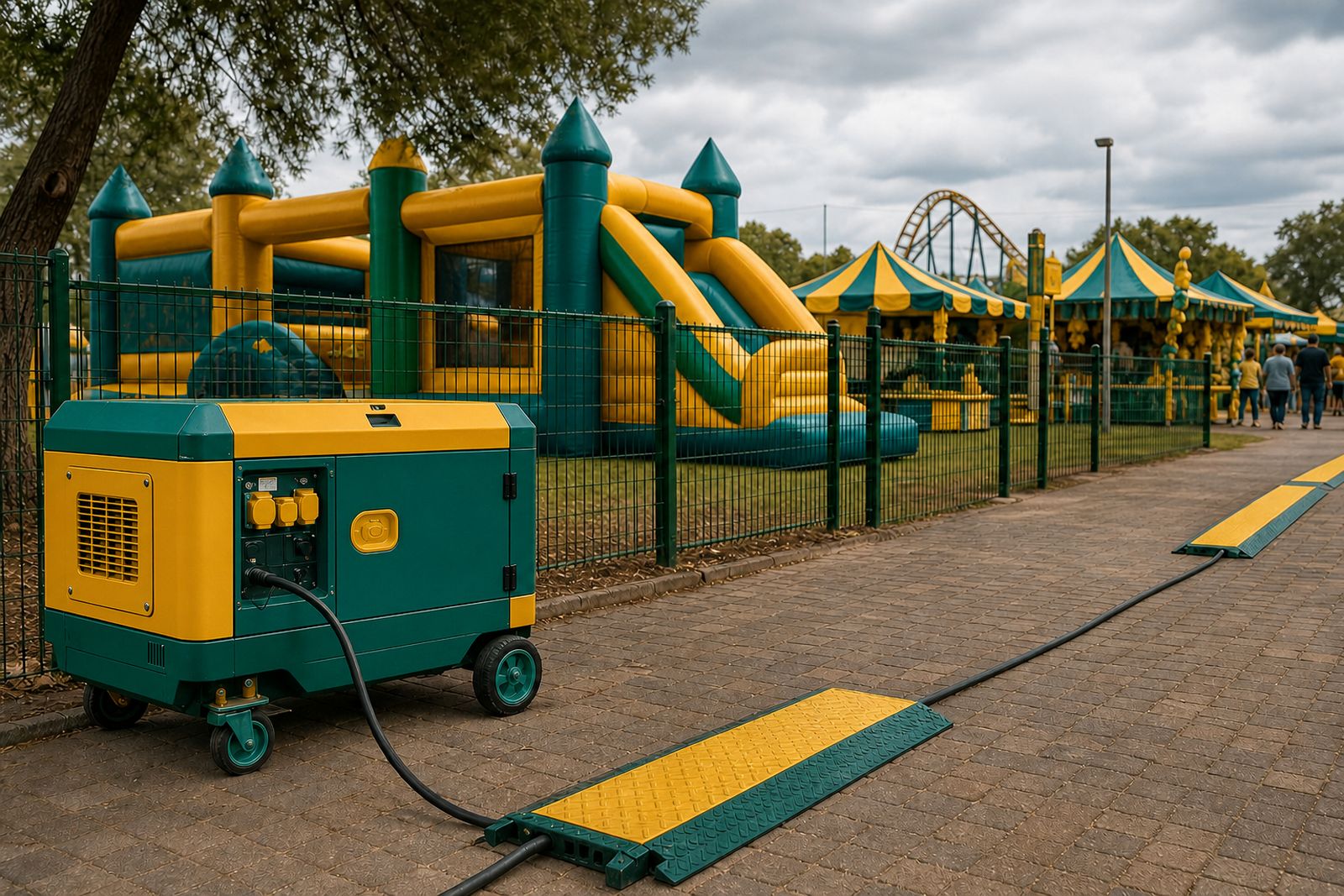
Electrical gear and water never mix well, so cable routes need real attention. Generators, extension lines and plug points should stay in dry positions, with cover where needed and no cable crossing a puddle or a walkway that will fill with water. If an attraction uses power for blowers, audio, lights or a machine, the route from source to unit must be planned before guests arrive.
That planning also helps with crowd flow. A cable run that crosses a queue can force awkward detours and create a slip risk. The same applies to snack carts, mascots, or photo booth setups that need repeated access by staff and guests. In wet weather, neat routing is not a detail, it is part of the site control.
- Keep plugs and couplers off damp ground.
- Use raised routes where foot traffic is heavy.
- Separate guest paths from crew access paths.
- Cover exposed working points without trapping moisture.
- Test the full route before guests enter.
Queue flow matters when people shelter in one spot
Rain pushes people inward, and that can create a bottleneck very quickly. If the site has a hall, tent or foyer, queues tend to bunch around the first dry edge. The plan should show where children wait, where parents stand, and where crew members guide movement without blocking exits.
Queue management becomes more important when a carnival game stall, a snack cart or a photo booth is the only dry attraction open. A simple barrier line can protect the front of the stall and stop guests from crowding the operator. On family days and school events, this kind of control keeps the mood calmer and gives the host team a clearer view of what is happening.
Build a weather call sheet before the event starts
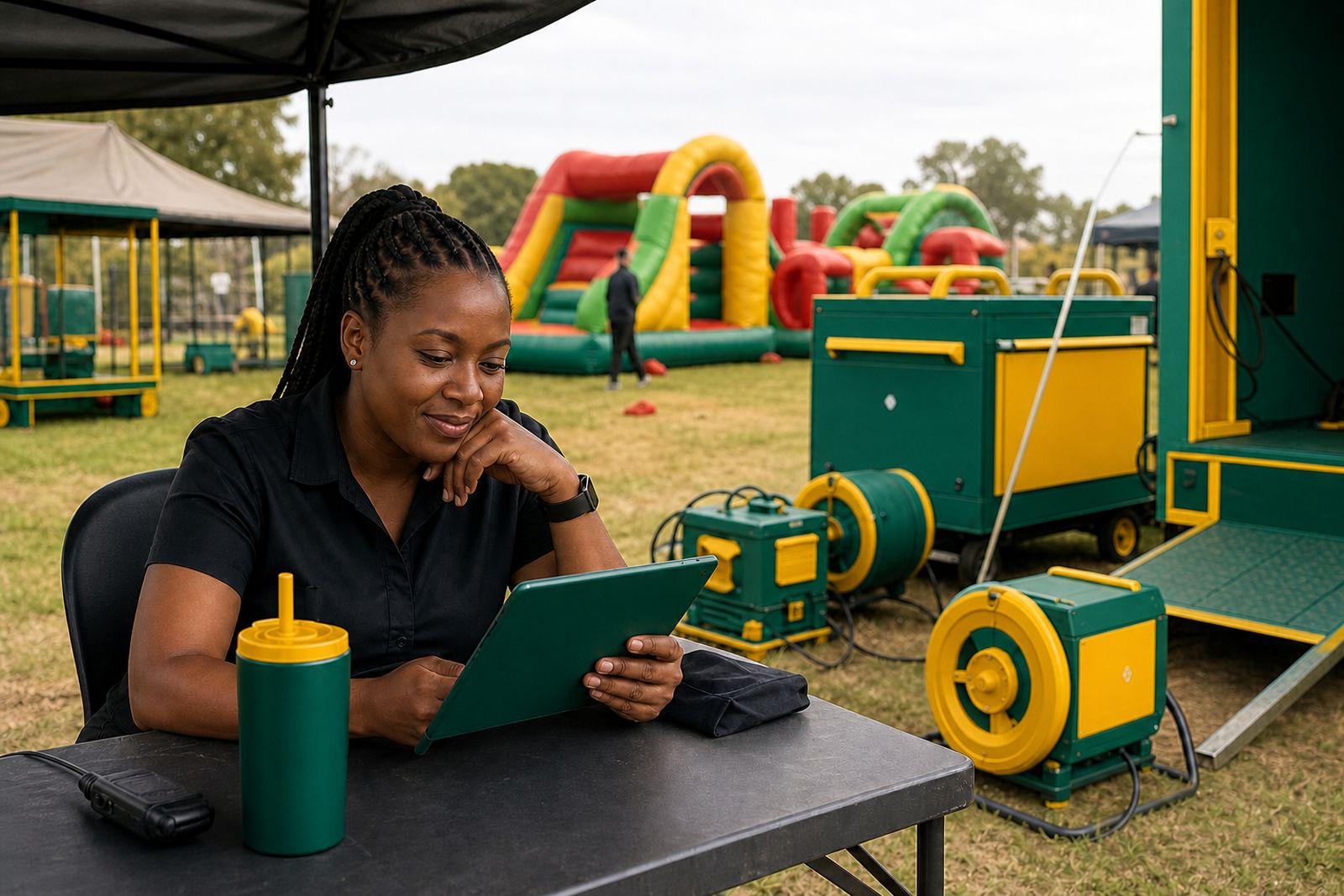
A weather call sheet gives everyone the same instructions when conditions change. It should state which items move indoors, which items stop, who checks the ground, and who decides when a unit must be paused. Without that sheet, people ask different questions at the same time and the event starts to wobble.
Use short, direct notes that a crew member can read at a glance. Include where backup shelter sits, where spare mats are stored, and which items can be stripped down first if the sky opens up. If the booking includes mascots, snack carts, or ride attendants, write down where those teams wait while the weather is being assessed. The cleaner the instruction set, the less guesswork on site.
- Primary wet weather position for each item.
- Names of the people who can pause a unit.
- Safe storage point for loose stock and accessories.
- Backup route for delivery and collection vehicles.
- Notes on where guests should gather if rain starts.
A sound wet day backup plan is practical, not dramatic
The best backup plan is usually the plainest one. It respects the forecast, but it also respects the site, the age group and the equipment involved. Schools often need a hall or covered quad option. Malls may need a tighter footprint with clear public walkways. Corporate family days can use tents, foyers or indoor spillover areas if the layout allows it.
For a birthday, the plan may be as small as moving the photo booth, snack cart and one compact game zone under cover while the larger inflatable waits for drier ground. That call is easier when the plan already covers space needs, anchoring method, power points and the likely weather pinch points. A sensible plan keeps the day usable instead of forcing a scramble once the wind shifts or the rain settles in.