
Start with the school grounds, not the equipment list
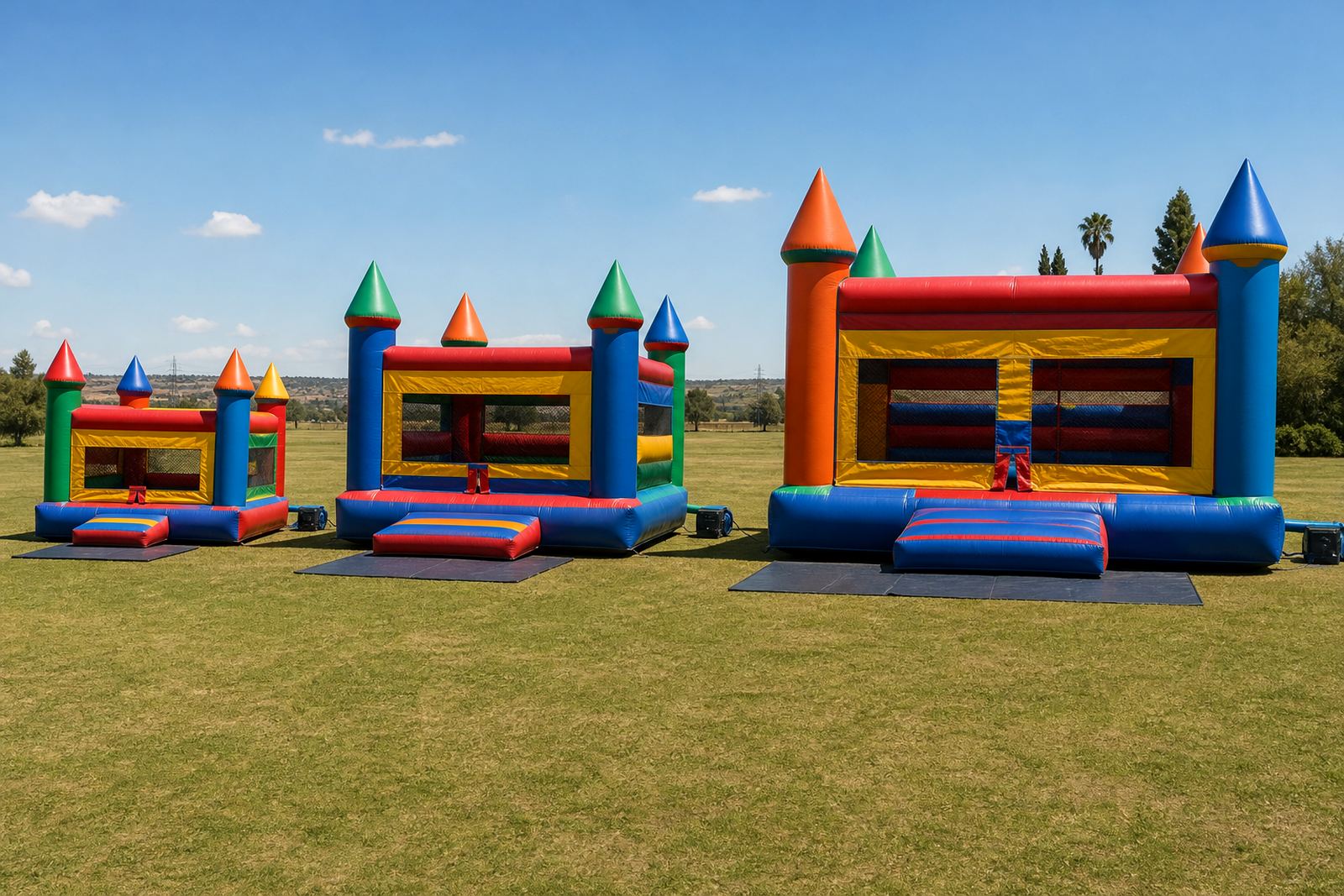
Begin by looking at the yard, hall, sports field or paved area that will carry the activity zone. A jumping castle needs level ground, clear access for delivery and enough open space around the sides for anchoring, safety mats and crew movement. Inflatable obstacle courses need even more room, especially where learners will enter, exit and wait in line without crossing through the run route.
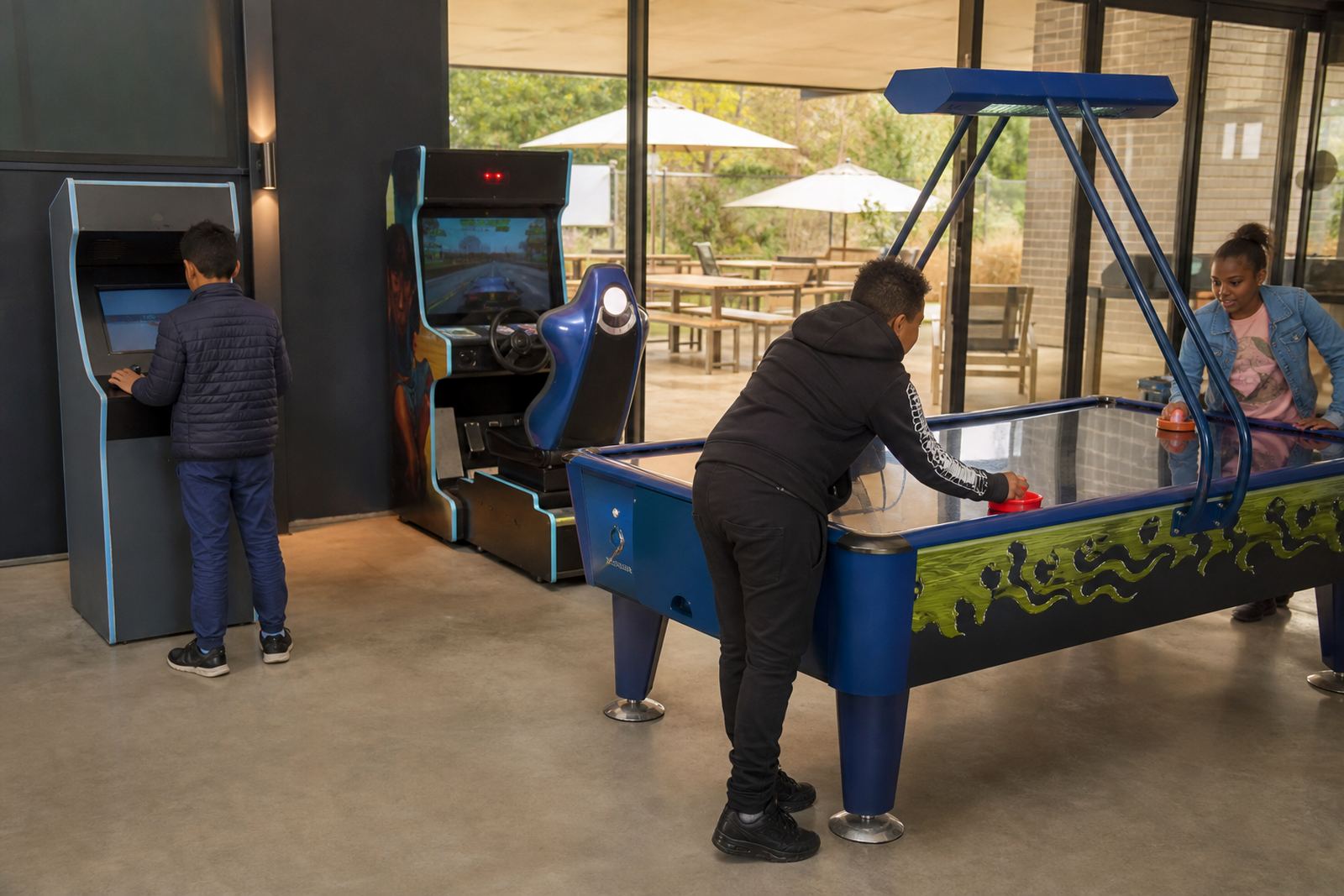
It also helps to think about age groups before you book. Foundation Phase learners need smaller play units, lower entry points and closer supervision. Older learners can handle larger obstacle layouts, carnival games and arcade machines, but the flow still needs control so the whole programme does not bunch up at one point.
- Measure the available space, including safe walkways.
- Check for trees, poles, walls and drainage covers.
- Keep vehicle access clear for setup and collection.
- Separate active play from snack counters and photo areas.
Match the amusement to the age group and programme length
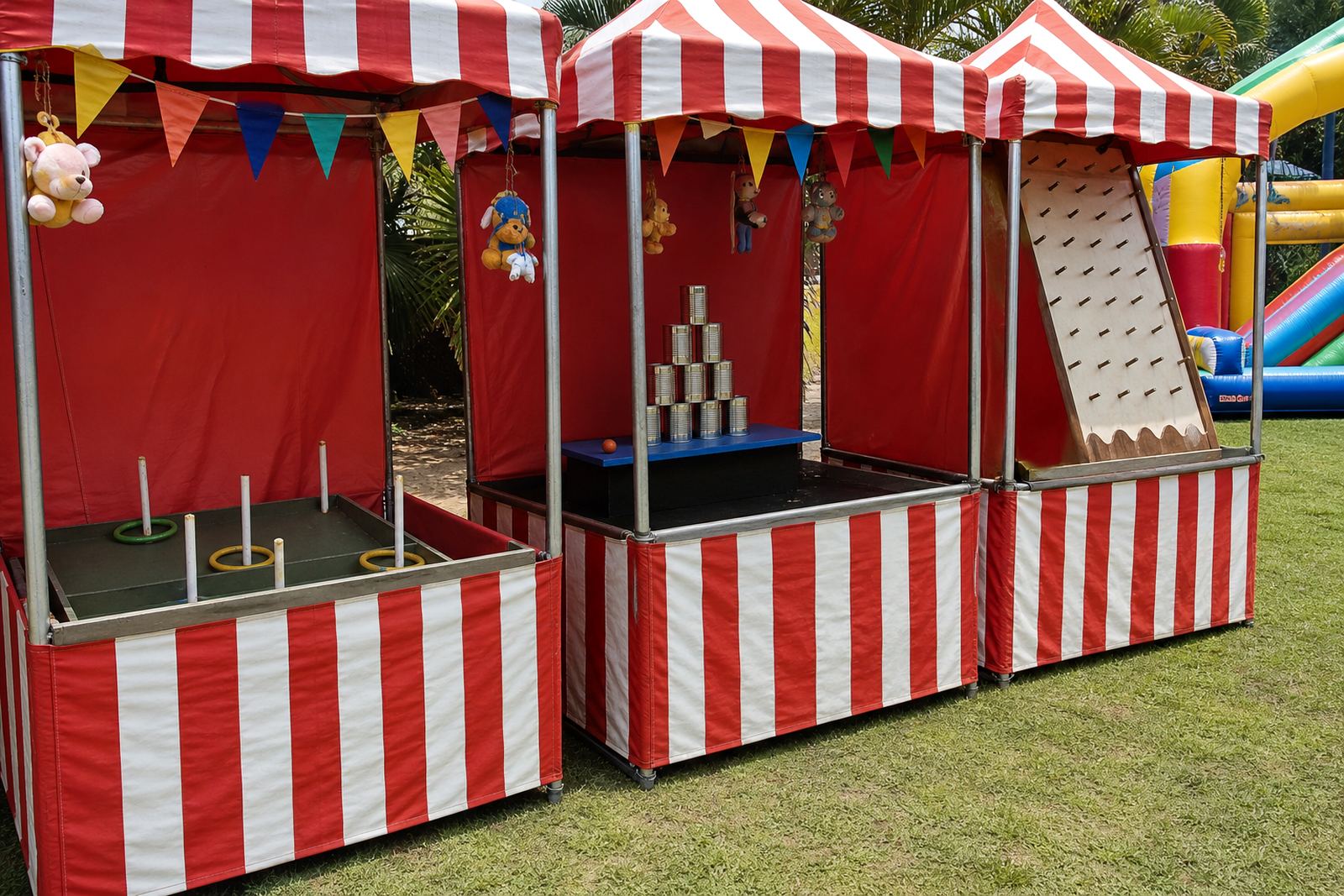
A school day moves in blocks, so the entertainment should do the same. Short rotations suit carnival game stalls, candy floss carts, popcorn machines and photo booth sessions. Longer intervals suit inflatables, foam or bubble machines, mascots and small fairground rides, especially where learners can enter in turns and be counted before each round starts.
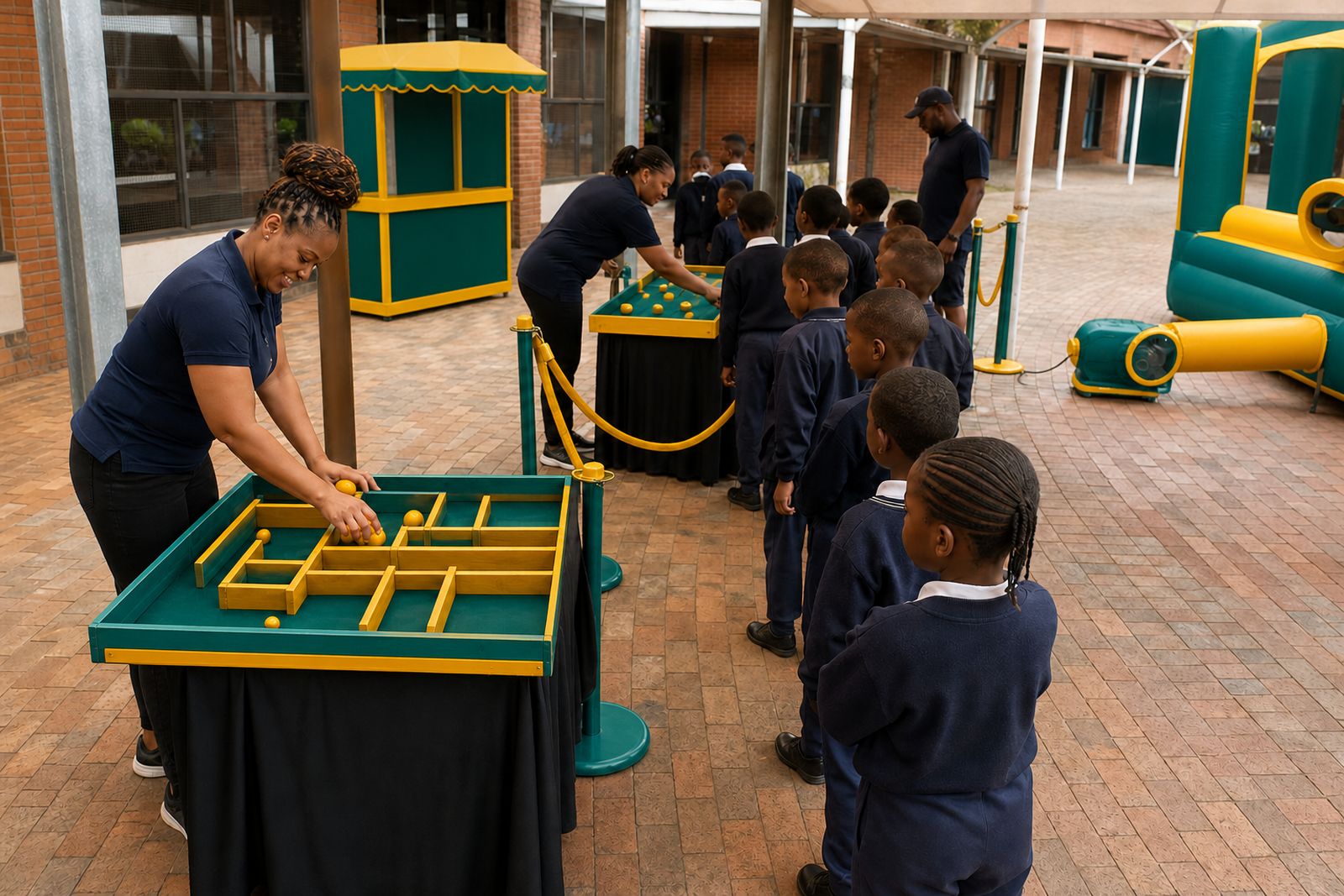
Age and height limits matter more than the headline item. Some activities are better for younger children, while others work only when learners are tall enough to use the equipment safely. The crew should also know how many riders, players or guests can use each item at once so the queue does not spill into other school spaces.
- Use smaller, calmer activities for younger grades.
- Reserve bigger inflatables for older learners where suitable.
- Mix active play with seated activities for balance.
- Plan staggered rotations so every class gets a turn.
What the crew handles on site
Delivered amusement hire is only smooth when the setup is planned around the site itself. The crew places mats, checks anchoring points and positions blowers, cabling or power equipment before any child is allowed near the unit. For indoor halls, the team also checks height clearance and floor condition, while outdoor bookings call for extra care with wind, dust and uneven ground.
Supervision comes with the job as standard. A trained crew can manage entry, watch the activity zone, guide learners through a turn system and stop play if weather or ground conditions change. For snack carts, photo booths and arcade cabinets, the team also keeps the flow moving so teachers are not pulled away from the event schedule.
- Set up mats, signs and queue points before opening the area.
- Keep blower units and cords out of walking paths.
- Use attendants for photo booths, snack service and ride control.
- Close each item in an orderly way before collection starts.
Power, weather and collection planning for school dates
Some equipment needs mains power, and some sites need a generator plan if the available supply is too far from the play area. That includes inflatables, foam or bubble machines, popcorn carts, candy floss equipment and photo booths with lighting or printers. Good planning also covers cable runs, generator placement and where staff can stand without blocking the route.
Weather planning matters just as much on school grounds. Outdoor inflatables and rides need a wet weather plan, especially in Gauteng summer storms or windy coastal conditions. A backup layout, sheltered space or adjusted collection order can keep the day moving when the forecast changes. The same applies to school halls where access doors, parking bays and delivery times need to be mapped in advance.
- Confirm the power source and cable route before the event.
- Keep a weather alternative ready for outdoor activities.
- Mark the setup and strike path for clear vehicle access.
- Plan where wet shoes, bags and queue lines will sit.
How schools can keep rotations calm and fair
Queue management does a lot of the heavy lifting at school events. If the line is too loose, learners drift between activities and supervision becomes harder. If it is too tight, the day feels tense. The better approach is a simple rotation plan, with class groups, time slots or colour-coded turns that teachers and attendants can follow without constant reshuffling.
Snack service and play zones should not compete for the same space. Popcorn, candy floss and refreshment counters work best near the edge of the event area, while inflatables and rides sit where the surface is open and easy to supervise. That layout keeps noise, movement and queueing separated enough for teachers to manage the crowd without calling learners back every few minutes.
A short briefing with the school team helps too. It should cover entry points, lost child handling, class escorts and who takes the lead if a learner needs a pause from the queue. Small details like that usually matter more than a long programme sheet.
Booking steps that keep the day grounded
For a school booking, the usual process starts with the date, learner numbers, venue type and the mix of activities you want on site. After that, the layout can be matched to available space, age group and power needs. A deposit is normally part of securing the date, with the final event plan set around access, supervision and collection arrangements.
Midrand events often need road-ready logistics for town, suburban and out-of-area bookings, so it helps to confirm gate access, parking limits and any school rules for contractors on site.
- Date, venue and learner count.
- Age groups, class rotation plan and supervision points.
- Power access, rain plan and access gate details.
- Choice of inflatables, games, food carts and support staff.