
Open or enclosed: the layout changes the experience
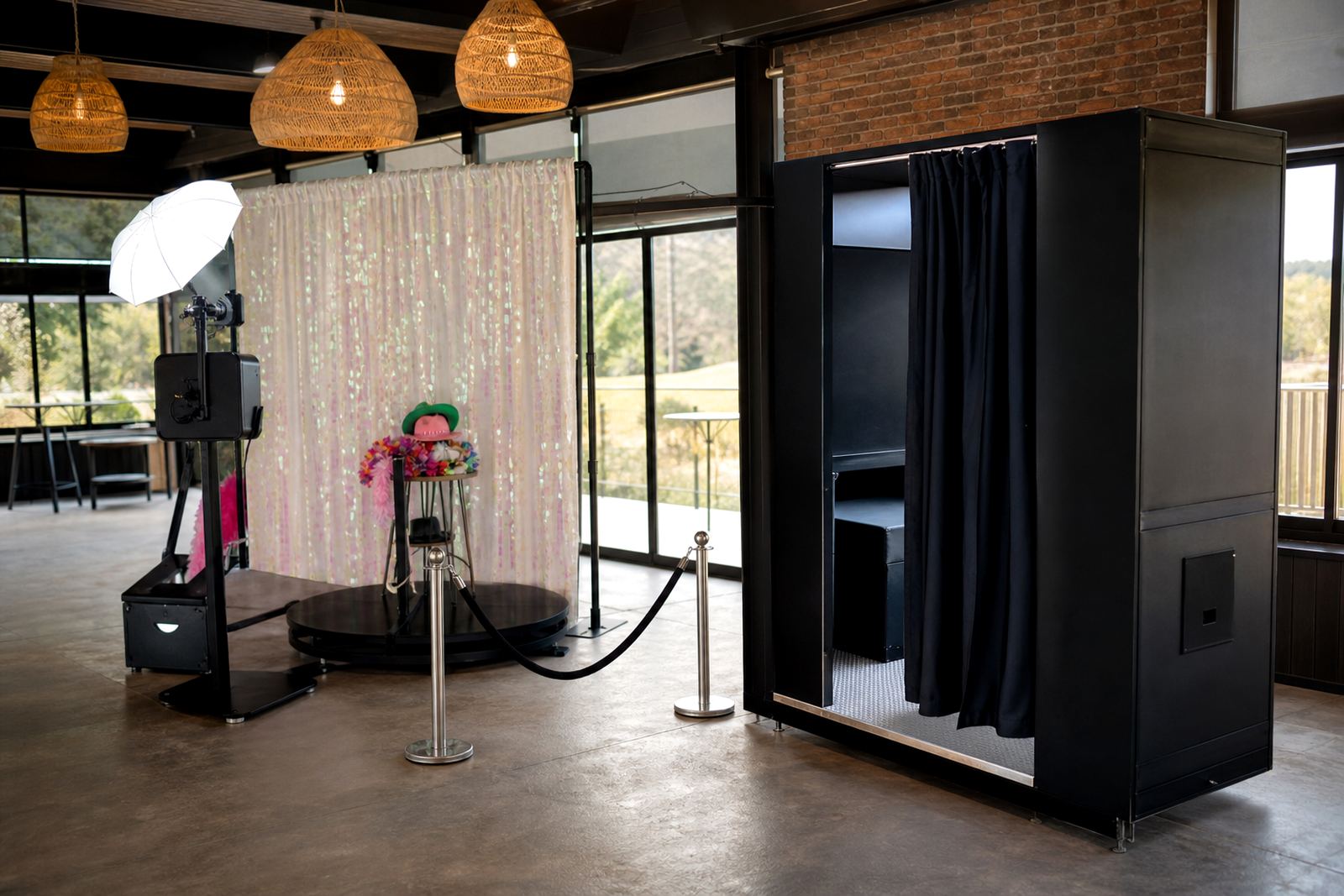
An open booth uses a camera stand, backdrop and a marked photo area. It suits mixed groups, larger families and corporate crowds because people can step in and out without squeezing through a doorway. An enclosed booth gives a more private feel, which helps when guests want a quieter moment or a tighter frame for small groups. For birthdays, the enclosed style can work well in a corner of a hall or under a canopy, while open setups are often the better fit where traffic keeps moving.
The choice is not only about appearance. It also changes how long guests stay in the zone, how many people can form a queue and how easy it is for crew to guide the line. In busy venues, open layouts usually let the photographer or attendant manage a faster rhythm, while enclosed units can slow the pace a little and create a clearer boundary around the activity.
- Open booth: easier for larger groups and brisk guest flow.
- Enclosed booth: better for privacy and smaller spaces.
- Both need a stable surface, clear queue space and simple access.
Space, backdrop and guest flow around the booth
A photo booth needs more than the box or camera point itself. Leave room for the backdrop, the posing area and a short queue that does not block a food table, entrance or activity lane. In a shopping centre, that often means keeping the booth close enough to draw attention but far enough from walkways so people can stop without bunching up. At a school fair or corporate family day, the booth should sit where parents can watch and children can step forward safely.
Backdrop choice matters too. Plain cloth, branded panels or themed props all change how the photos read, but the main thing is that the backdrop stays flat and neat. Strong sun can wash out the lighting, so shaded placement or a tented area helps. If the site is outdoors and wind picks up, the crew will need ballast, weighted stands or tethering so the setup stays steady.
- Allow space for queueing, not just the booth footprint.
- Keep the backdrop away from busy traffic lines.
- Use shade or controlled lighting where glare is a problem.
Power, printing and the small details that keep people moving
Most photo booth setups need a reliable power point for lighting, screens, printers or attendant equipment. Where mains power is not close enough, a generator can be part of the plan, especially for outdoor venues, road shows or large family days. Cable runs should be kept tidy and covered where people will walk. A printer station, if included, needs enough table space for paper, props and extra media, not just the machine itself.
If the booth includes instant prints, the pace of the queue depends on the print size and the number of copies per session. If the setup is digital only, guests can move through more quickly, but the handover moment changes and the attendant needs to direct people clearly. Foam and bubble machines, mascots and other attractions nearby can add energy, but they also need separation so the booth area does not become chaotic.
- Check the power point location before the event layout is final.
- Keep cables flat, covered and out of the walking line.
- Leave a small table area for props, paper and spare consumables.
Open-air weather and indoor crowd control are handled differently
Weather changes the booth plan more than many organisers expect. In the coastal heat of Durban or the humidity of Johannesburg summers, paper, tape and fabric backdrops need a bit of care. A sudden breeze can shift a lightweight backdrop, and bright midday light can create washed faces or hard shadows. For outdoor bookings, a weather plan helps the crew decide whether to move the booth under cover, add side screens or adjust the timing of the busiest photo period.
Inside malls, halls and conference spaces, the challenge is usually crowd movement. The booth should not sit where people cross from one end of the venue to another. A good position lets the attendant manage a queue without blocking a mall passage or school corridor. If the venue has sound limits or narrow access points, the setup may need smaller props and a more compact footprint.
Booking steps, deposits and site checks without the guesswork
A proper booking starts with the event date, venue address, guest age range and the kind of booth experience you want. Schools often need a simpler setup with clear supervision, while corporate family days may want branded backdrops and a steadier print flow. For birthdays, a shorter hire with props and a playful backdrop may be enough, but the area still needs to be measured properly before the equipment is allocated.
A deposit is usually part of the booking process, especially where stock must be reserved and transport arranged. A site check helps with access gates, lift sizes, floor surfaces, parking, power points and any venue rules about setup times. If the booth is going into a covered area, the crew can also check ceiling height and wall clearance so the backdrop does not sit too close to furniture or signage.
- Share the venue, event type and approximate guest numbers.
- Note whether the space is indoors, shaded or fully open.
- Confirm access for delivery, loading and collection.
Running the booth on the day, from queue to strike
Once the booth is in place, a trained crew keeps the flow steady. That usually includes setting the backdrop, checking the camera angle, organising props and guiding guests into the right position. On busier jobs, a photo booth attendant helps with the queue, explains how the session works and keeps the space tidy between groups. If there is a print option, someone also monitors paper and supplies so the handover does not stall.
At the end of the event, strike and collection need their own window. Prop bins, tripods, lighting and backdrop pieces all come down in a set order so nothing is missed. The crew also checks that the area is clean and that any tape, weights or cable covers are removed. For road shows across Gauteng and national events in Johannesburg, Pretoria, Cape Town, Durban or Bloemfontein, that final pack-down matters just as much as the start of the job.