
Start With the load, not the plug
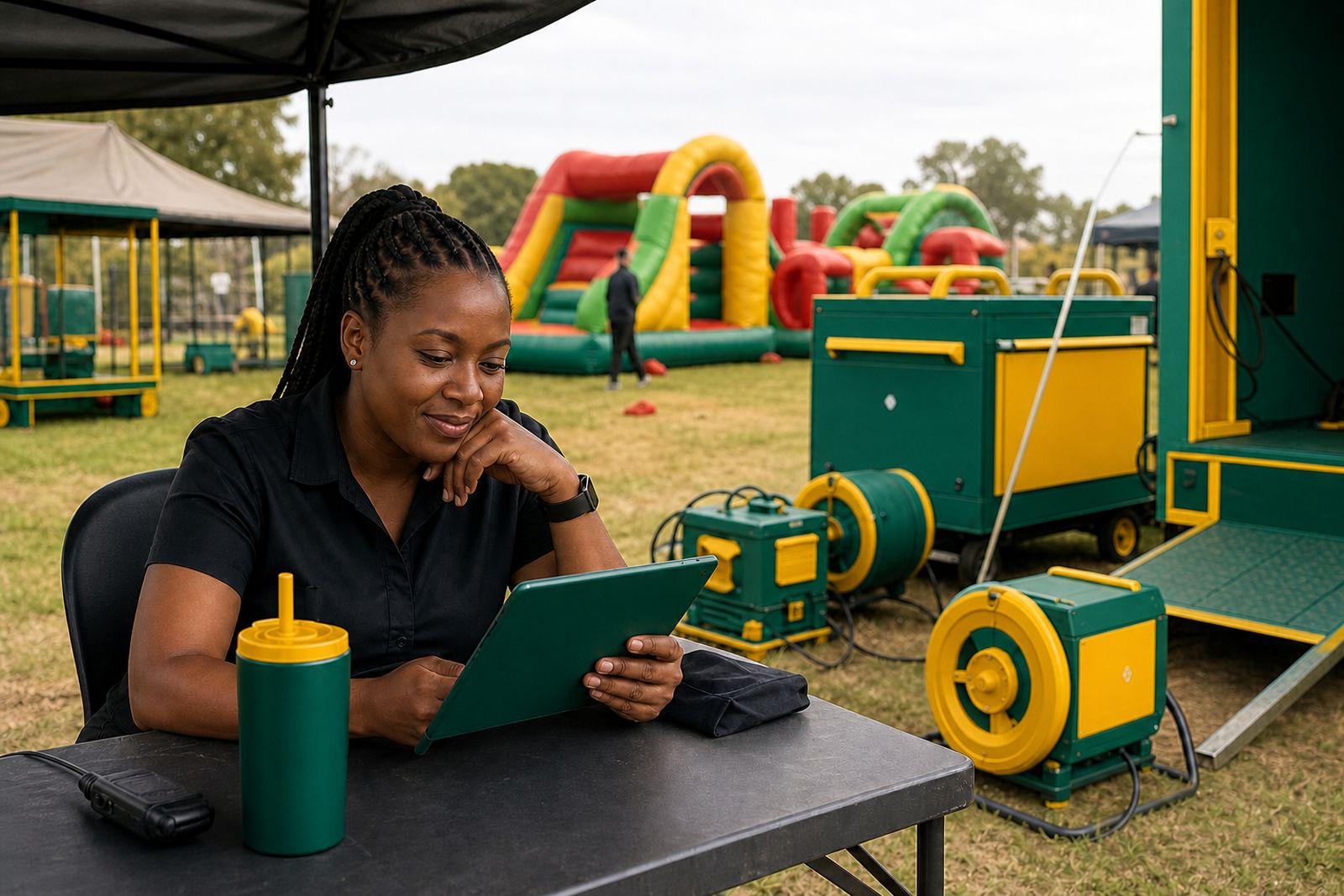
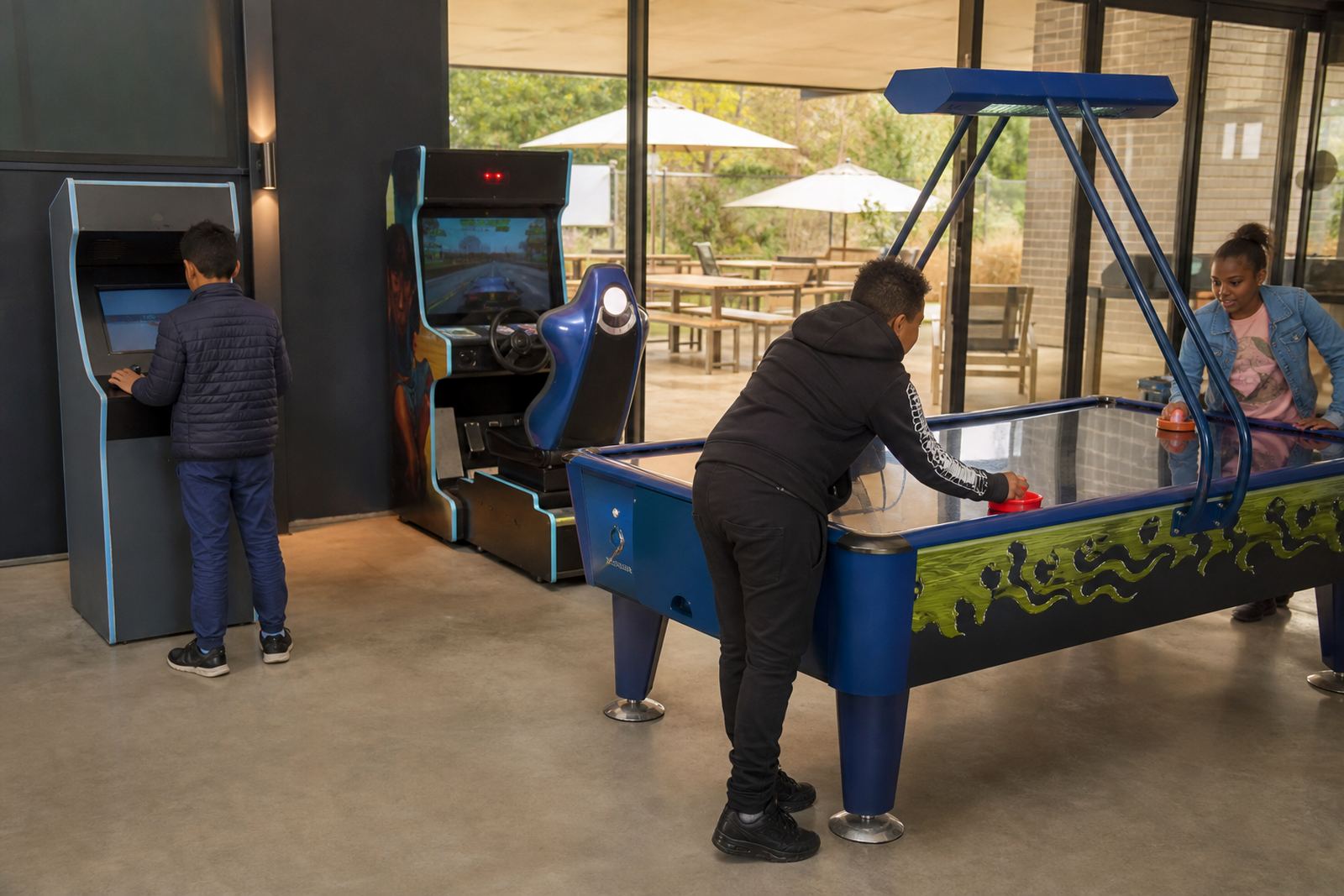
Each item uses electricity in its own way. A blower for an inflatable needs a steady supply while it is running, arcade cabinets want stable power for long periods, and snack carts may need separate circuits for heating or spinning parts. Photo booths, foam machines and bubble units each add their own draw, so the first job is to list every item and note whether it runs once, keeps running, or cycles on and off.
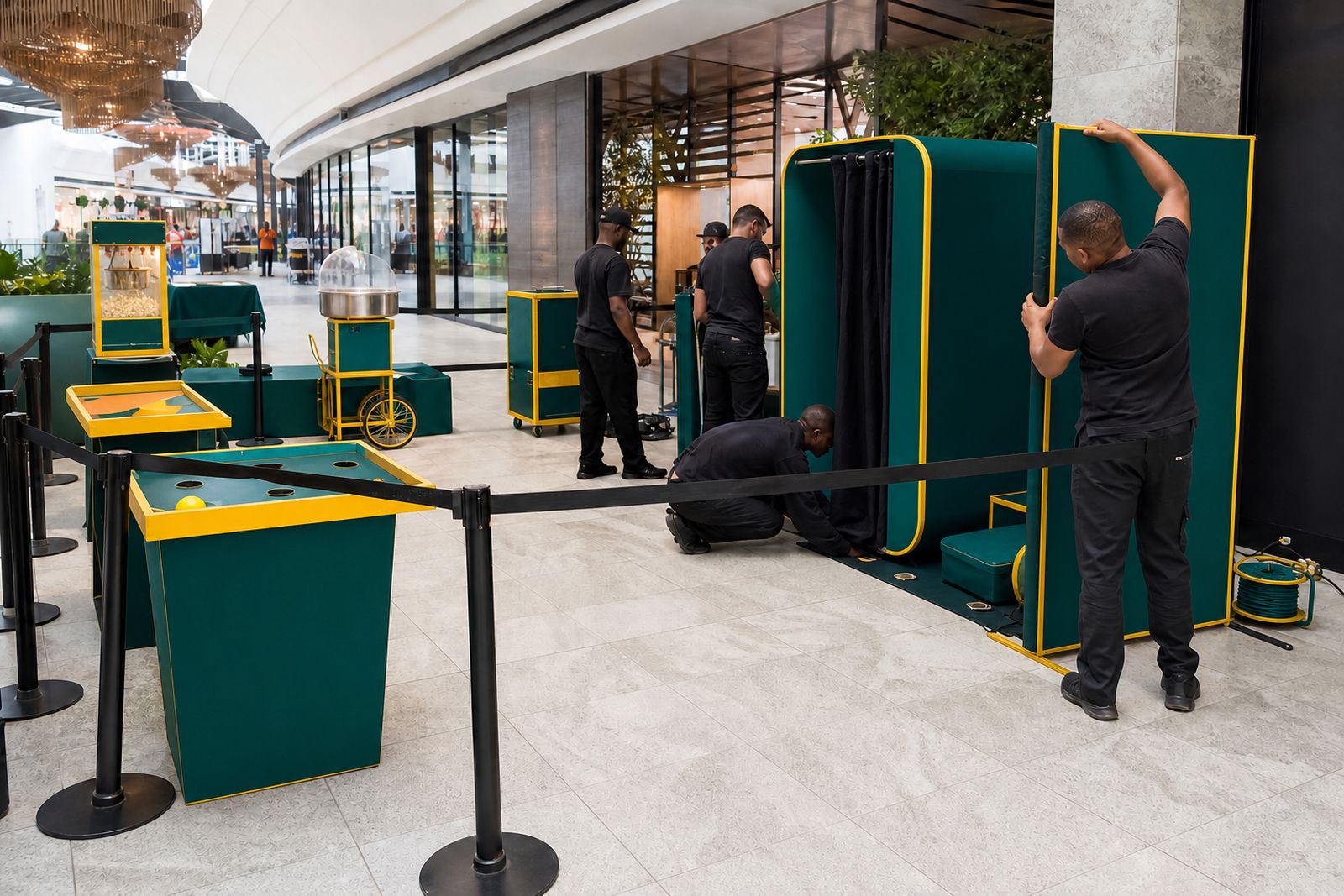
At a school sports field or a mall forecourt, the available sockets may be spread far apart and some points may already feed lights, tills or sound gear. So the layout is as important as the list of equipment. A clean power plan leaves space for walkways, queue areas and crew access too.
- List each item that needs mains power.
- Separate constant draw items from short burst items.
- Check where the sockets sit in relation to the setup area.
- Keep an eye on what else is already on the circuit.
Sockets, circuits and the hidden distance between them
A socket on paper can look fine, but the distance to the setup point changes the picture. Long cable runs can reduce convenience and create trip hazards if they are not routed properly. For a birthday in a garden, the nearest wall point may work for a small setup. For a corporate family day or school fun day, the same approach can fail once several items are running at once.
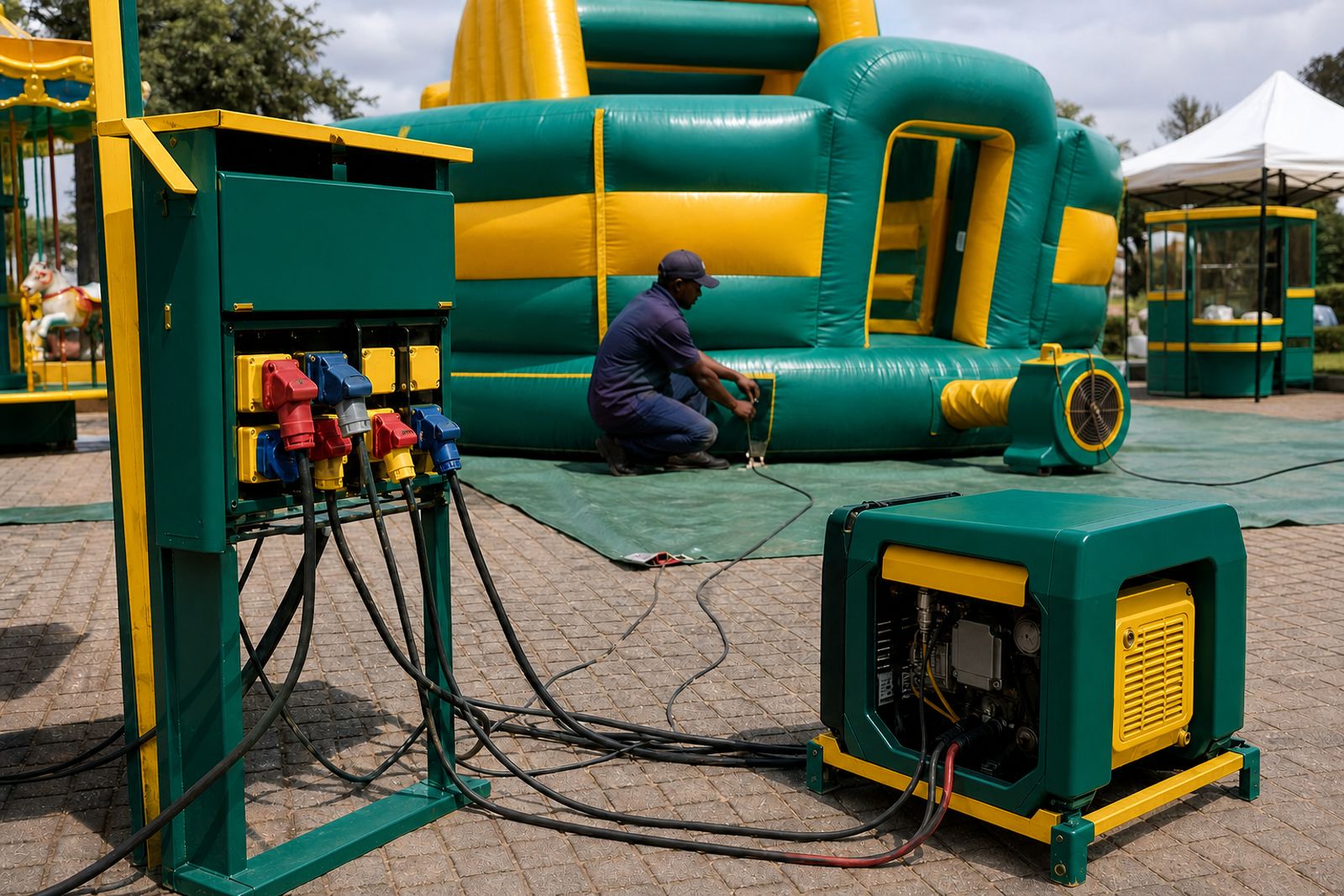
We look at how many sockets are available, how they are spread across the site and whether the same source feeds more than one item. On some sites the safest answer is to split the load across several circuits. On others it is better to use one generator and keep the whole amusement zone on a single managed supply.
- Measure the distance from socket to setup point.
- Allow for safe cable routing around feet and trolleys.
- Check if more than one item shares the same circuit.
- Leave space for crew access near each connection point.
Blowers, mats and anchoring need their own space
Inflatables are not only about the blowers. They need room for the unit itself, a clear area around the entrance and exit points, and enough space for mats, pegs, sandbags or other anchoring methods used on the day. In windy weather, the anchoring line becomes just as important as the power lead. A proper setup avoids loose corners, crossed cables and children stepping over gear.
For obstacle courses and larger jumping castles, the blower is usually placed where it can pull air without being blocked by walls, fencing or loose décor. The cable should not sit where wet grass, spilled drinks or food service traffic can affect it. If the ground is damp, the crew may raise cable routes and add extra checks around the base of the unit.
- Allow clear space around the inflatable and blower.
- Keep mats flat at entrances and high-traffic edges.
- Use the correct anchoring for grass, paving or indoor floors.
- Keep cables out of the main run and queue lines.
When a generator makes more sense
Some venues have enough power for a small setup, but not for the full mix of amusements, snack carts and photo booth gear. A generator can be the cleaner option when the site has limited sockets or the event area sits far from the main building. It also helps when several items need to run together and the load would be too heavy for one circuit.
The size of the generator depends on the actual draw, the length of the event and the combination of equipment. A foam machine, popcorn unit and inflatable blower will not behave the same way as a single arcade cabinet. Good planning avoids overloading and keeps the event running without awkward pauses while a crew tries to reshuffle plugs under pressure.
- Use a generator when socket access is limited or too far away.
- Match generator capacity to the full equipment list.
- Keep fuel handling and placement in a safe, open spot.
- Plan for supervised use when several powered items run together.
Weather, wet ground and cable protection
South African weather can shift quickly, especially during outdoor school and mall activations. Rain changes how cables lie on the ground and wet grass changes how anchoring is handled. A weather plan does not mean panic, it means having a route for coverings, cable protection and safe pack-down if conditions turn poor. Foam and bubble machines also need extra care because overspray can make surfaces slippery.
If the surface is wet, the crew may shift the layout so the safest points stay clear. Indoor venues still need care around entry points, wet shoes and drink spills. The aim is to keep the inflatable area dry and make the movement paths obvious.
- Check whether the site is grass, paving or indoor flooring.
- Keep power points and joins away from pooling water.
- Use cable covers where people walk across routes.
- Plan a dry area for snack carts and equipment controls.
Booking notes that help us set power correctly
When a booking is put together, the power section should be as clear as the venue address. A site sketch, rough measurements and the list of chosen amusements help shape the setup. If you are mixing inflatables with carnival games, arcade machines, candy floss carts or a photo booth, the crew needs to know which items share the same zone and which ones must stand apart.
If the event has unusual access, long cable runs, or a hall with limited wall points, add that detail early. It helps with the delivery setup, the safe route for cables and the choice between site power and backup supply.
- Note the venue type and the ground surface.
- List every powered item in the hire.
- Note the distance from sockets to setup space.
- Include any access limits, stairs or long walks.